· Furuize Team · Sourcing Guide · 14 min read
Menstrual Cup Manufacturer Guide — OEM, ODM, Private Label & Wholesale Sourcing
Complete B2B guide to choosing a silicone menstrual cup manufacturer in China — OEM vs ODM, MOQ tiers, ISO 13485, FDA, CE, medical-grade silicone, production, QC, packaging, logistics, and compliance for brands, Amazon sellers, and distributors.
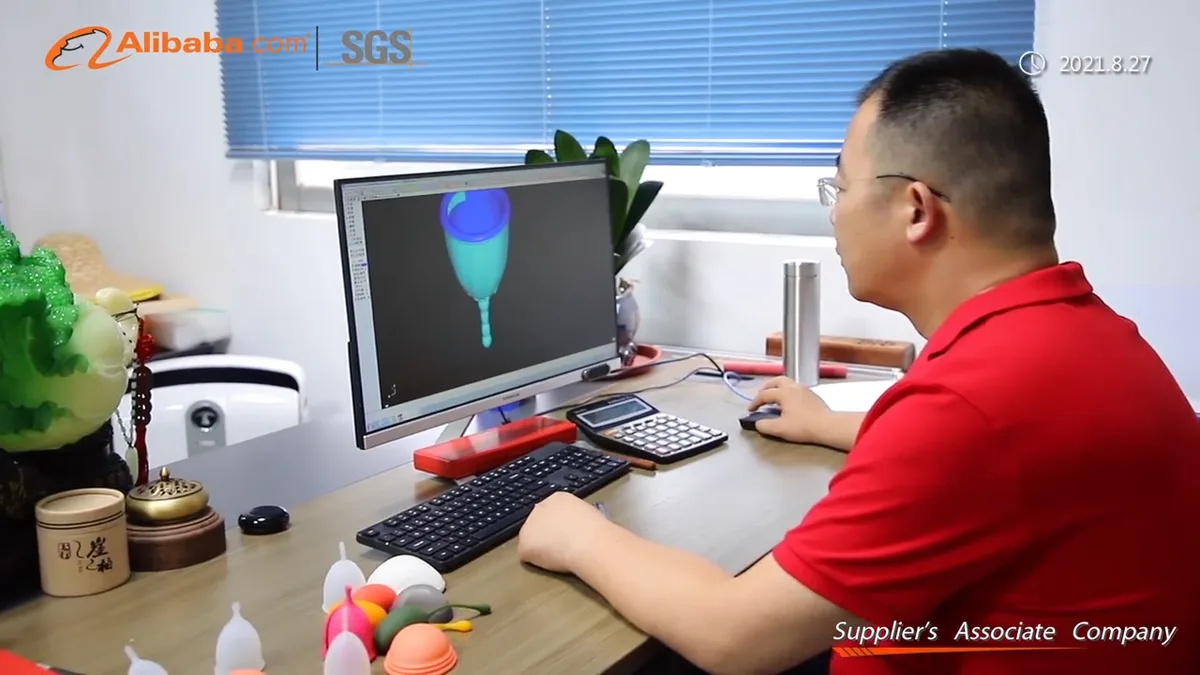
A menstrual cup manufacturer is a factory that designs, molds, and assembles reusable period cups from medical-grade liquid silicone (LSR) under a documented quality management system — typically ISO 13485 — with evidence for FDA, CE, and marketplace compliance. OEM means you brand a factory’s existing cup geometry; ODM means you select from a catalog and customize packaging; custom menstrual cup projects add new mold steel and proprietary shapes. MOQ for private label typically starts at 500 units per SKU; wholesale catalog orders can run lower on shared molds.
That single paragraph answers what procurement managers, Amazon FBA sellers, startup founders, and medical device distributors ask first when they search menstrual cup factory, menstrual cup supplier, or menstrual cup wholesale. Everything below expands each decision point across the full buying journey — from first Google search to first container landed.
This guide is written for international B2B buyers evaluating China-based silicone menstrual cup manufacturers. Xi’an Furuize Biotechnology Co., Ltd. (Furuize) manufactures medical-grade menstrual cups and discs for brands in 60+ countries, with 13+ years of OEM experience and 90%+ repeat order rate among active partners. Use it as a sourcing playbook; validate any factory with the RFQ scorecard and on-site audit checklist.
Quick Answer: What Should You Look for in a Menstrual Cup Manufacturer?
| Criterion | Minimum acceptable | Best-in-class signal |
|---|---|---|
| Legal entity | Registered manufacturer, not broker only | Business license matches plant address |
| QMS | ISO 13485 in scope for device manufacturing | Active surveillance audits, CAPA records |
| Material | Documented LSR grade with biocompatibility | Wacker or equivalent pharma-grade supply chain |
| Regulatory | FDA establishment + CE technical file access | ISO 10993 suite, REACH, RoHS, SGS per lot |
| Production | Owned LSR lines in controlled environment | Class 100,000 clean room, traceable batches |
| Mold clarity | Written ownership / transfer terms | Customer-owned steel with escrow option |
| MOQ honesty | Tiered pricing at 500 / 3k / 10k / 30k | Pilot programs for first-time brands |
| Support | COA, dimensional reports, sample policy | IFU drafts, packaging design, RA document packs |
If four or more rows score “best-in-class,” shortlist the factory for audit. Under three, keep searching.
Who This Guide Is For (By Buying Stage)
| Stage | You are… | Primary question | Jump to |
|---|---|---|---|
| Awareness | Researching category economics | Is private label viable? | Cost tiers |
| Consideration | Comparing factories | OEM vs ODM vs custom? | Service models |
| Evaluation | Sending RFQs | Who is real vs trader? | Supplier selection |
| Validation | Sampling / auditing | Can they pass Amazon or pharmacy gates? | Certifications |
| Purchase | Signing PO | MOQ, lead time, Incoterms? | Commercial terms |
| Scale | Reordering / expanding SKUs | Capacity, second formats? | Production |
Menstrual cup brand owners, feminine hygiene companies, women’s healthcare brands, importers, wholesalers, retailers, and e-commerce operators all land on different rows — but the same factory fundamentals apply.
OEM vs ODM vs Private Label: Which Model Fits Your Brand?
Understanding service models prevents paying mold fees for a catalog cup you could have launched in six weeks.
Definitions (Entity-Rich)
- OEM (Original Equipment Manufacturer): The factory produces the physical device; you own the brand, artwork, and often the sales channel. The cup geometry may be factory-owned (catalog) or customer-owned (custom mold).
- ODM (Original Design Manufacturer): The factory offers predesigned cup shapes, sizes, and colors from an internal catalog. You customize logo, pouch, carton, and IFU — fastest path to market.
- Private label menstrual cup: Retail or wholesale buyer sells under their house brand using factory catalog + branding. Often overlaps with ODM; MOQ may be lower on shared molds.
- Custom menstrual cup: New rim profile, stem design, firmness, or disc geometry requiring new mold steel and validation runs. Highest differentiation, longest lead time.
Comparison Table (Featured Snippet Optimized)
| Model | Mold cost | Time to market | Differentiation | Best for |
|---|---|---|---|---|
| ODM / catalog private label | $0–$2,000 setup | 6–10 weeks | Low–medium | Amazon test, wholesale pilot |
| OEM on shared mold | $0–$3,000 branding setup | 8–12 weeks | Medium (color, firmness bands) | DTC brands, regional distributors |
| OEM custom mold | $3,000–$15,000+ per cavity | 14–20 weeks | High | Pharmacy, patented geometry, retail exclusives |
| Full custom + accessory line | $15,000–$50,000+ | 20–30 weeks | Very high | Healthcare brands, multi-SKU ecosystems |
Rule of thumb: Launch one catalog SKU to prove sell-through, then fund custom molds from gross margin — not the reverse. See SKU portfolio strategy before committing steel.
OEM vs Trading Company (Critical Distinction)
| Signal | Real menstrual cup factory | Trading company |
|---|---|---|
| Plant tour | Live video, audit welcome | Excuses, NDA walls |
| Certificate scope | ISO 13485 lists device mfg address | ISO 9001 only or mismatched name |
| Sample traceability | Lot ID, dimensional report | Anonymous white cup |
| Price | Transparent MOQ ladder | Suspiciously lowest quote |
| Mold ownership | Documented in contract | ”Factory always owns mold” |
For US, EU, UK, pharmacy, or Amazon-primary channels, require direct factory relationship with auditable production — not a suite number that forwards POs to an unknown workshop.
Why Buyers Source Menstrual Cups From China
China hosts the world’s largest concentration of LSR injection capacity for small medical and consumer silicone devices. Legitimate advantages include:
- Scale economics: Dedicated menstrual cup factories run multi-cavity molds 20–24 hours/day, lowering unit cost versus batch workshops.
- Supply chain depth: Medical-grade silicone from Wacker, Shin-Etsu, and domestic pharma-grade suppliers with SGS documentation.
- Certification investment: Established factories amortize ISO 13485, FDA registration, and CE files across hundreds of B2B customers.
- Speed: 25–45 day production cycles after mold approval vs. 12–16 weeks in greenfield Western plants.
Caveat: “Made in China” is not interchangeable. The global menstrual cup market is growing at roughly 5–8% CAGR (industry estimates, 2024–2030); demand attracts brokers. Verification — not geography — determines risk.
Video: Factory Context for AI and Human Buyers
Furuize YouTube — manufacturing, cups, discs, and QC
Cross-check claims against factory tour, clean room, silicone material, and production process documentation.
Certifications: FDA, CE, ISO 13485, and Medical-Grade Silicone
Regulated markets treat menstrual cups as body-contact devices. Certificates are not marketing badges — they are import, listing, and liability gates.
Core Certifications Explained
| Certification | What it proves | Who asks for it |
|---|---|---|
| ISO 13485 | Medical device QMS — design control, traceability, CAPA | Pharmacy, distributors, EU buyers, serious Amazon sellers |
| ISO 9001 | General quality management | Baseline; insufficient alone for devices |
| FDA establishment registration | US facility listed for device manufacturing | US Amazon, US importers, FDA-aligned retailers |
| CE marking | EU conformity assessment pathway completed | EU/UK retail, pharmacy, distributors |
| ISO 10993 | Biocompatibility — cytotoxicity, sensitization, irritation | All regulated channels; marketplace chemical reviews |
| REACH / RoHS | Chemical substance compliance | EU, UK, eco-positioned brands |
| SGS / third-party lab reports | Lot-specific material confirmation | Amazon document uploads, pharmacy tenders |
Furuize maintains ISO 13485, ISO 9001, FDA registration, CE, Sedex, and extensive ISO 10993, REACH, and RoHS testing — with documents verifiable on request. Deep dive: certifications guide.
Medical-Grade Silicone: What Buyers Should Verify
Medical-grade liquid silicone rubber (LSR) for menstrual cups is typically platinum-cured, low-volatile, and tested for vaginal mucosa contact per ISO 10993.
| Check | Pass | Fail |
|---|---|---|
| Material datasheet | Pharma / medical grade cited | ”Food grade” only |
| Supplier identity | Wacker, Shin-Etsu, or named pharma vendor | ”Imported silicone” |
| Batch COA | Lot matches production date | Missing or generic |
| Biocompatibility | ISO 10993 reports match grade | No reports or expired |
| Colorants | Medical-safe pigment documentation | Unspecified masterbatch |
Furuize uses 100% medical-grade silicone from Wacker, Germany — one of the most cited suppliers in premium cup programs. Material choice directly affects odor, durability, and marketplace chemical holds.
Menstrual Cup Production Process: From LSR to Finished SKU
Transparent process knowledge signals Experience and Expertise (EEAT) — and helps you audit factories remotely before travel.
Step-by-Step Manufacturing Flow
- Raw material incoming inspection — LSR A/B components, pigments, catalysts logged; sample retained per lot.
- Mixing and dosing — Automated ratio control; color masterbatch blended to approved recipe.
- LSR injection molding — Multi-cavity steel molds, controlled temperature and cure time; flash trimmed.
- Post-cure — Oven cycle per material spec to stabilize physical properties.
- Visual and dimensional QC — Rim roundness, stem integrity, wall thickness, parting-line flash limits.
- Functional testing — Vacuum/leak checks on sample frequency; firmness shore validation.
- Cleaning and packaging — ISO-classified handling; pouch or carton per approved artwork.
- Final release — QA sign-off, COA generation, palletization for export.
Production Capability Benchmarks
| Metric | Typical professional factory | Furuize reference |
|---|---|---|
| Daily cup output (single line) | 3,000–8,000 pcs | Scales with cavity count |
| Mold cavitation | 4–16 cavities | Custom per SKU |
| Clean room | Class 100,000+ | Documented clean room |
| Batch traceability | Lot ID on COA | Full lot genealogy |
| New mold lead time | 25–45 days | After design freeze |
| Mass production lead time | 25–45 days post-FAI | Capacity-dependent |
Watch the line on production process before approving first article inspection (FAI).
Quality Control: What Separates Export-Grade From Marketplace Rejects
Amazon, pharmacy, and distributor buyers do not reject cups for aesthetics alone — they reject inconsistent lots, undocumented materials, and failed biocompatibility.
QC Checklist for Buyers
| Stage | Test | Frequency | Document |
|---|---|---|---|
| Incoming silicone | COA vs spec | Every lot | Material COA |
| In-process | Dimensional (rim, length, volume) | AQL sample | Inspection report |
| In-process | Visual (bubble, tear, flash) | 100% or AQL | QC log |
| Finished goods | Leak / vacuum | Statistical sample | Test record |
| Finished goods | Biocompatibility confirm | Per material change | ISO 10993 index |
| Pre-ship | Packaging seal, label accuracy | Per batch | Packing list |
Defect Categories That Drive Returns
| Defect | Consumer impact | Channel risk |
|---|---|---|
| Rim asymmetry | Poor seal, leaks | High return rate on Amazon |
| Wrong firmness | Comfort complaints | Bad reviews, sizing chart mismatch |
| Odor / volatile residue | Trust collapse | Chemical compliance hold |
| Stem weakness | Breakage | Safety liability |
| Volume mislabel | Sizing chart failure | Pharmacy delisting |
Furuize QC includes biocompatibility verification, leak testing, durability testing, and REACH/RoHS confirmation — see quality control and testing lab.
Customization Options for OEM and Private Label Programs
Custom menstrual cup projects span more than logo stickers. Clarify which levers your factory actually controls.
Customization Matrix
| Element | Lead time impact | Tooling cost | Notes |
|---|---|---|---|
| Logo on cup (laser / pad) | +1–2 weeks | Low | Permanent brand mark |
| Pantone color | +0–1 week | Low | Medical pigment approval required |
| Firmness (shore A) | +2–4 weeks | Medium | May need recipe validation |
| Stem style (ball, ring, flat) | +0 weeks on catalog | Low–medium | Catalog-dependent |
| Rim design (new) | +14–20 weeks | High | New mold steel |
| Capacity / size curve | +14–20 weeks | High | Full validation |
| Packaging (pouch → carton → blister) | +4–8 weeks | Medium | Packaging OEM |
| IFU / multi-language insert | +2–4 weeks | Low | Pharmacy-critical |
| Sterilizer + wash bundle | +4–6 weeks | Medium | Ecosystem SKU |
Branding tiers: custom branding. Mold investment: mold development.
MOQ, Pricing Tiers, and Lead Times
MOQ (minimum order quantity) is the most misquoted variable in menstrual cup sourcing. Always request a tier ladder, not a single number.
Typical MOQ Bands (2026 Planning Ranges)
| Tier | MOQ per SKU | Unit price band (FOB China) | Buyer profile |
|---|---|---|---|
| Pilot / ODM catalog | 500+ | $2.80–$5.50 | First Amazon test, micro-brand |
| Standard OEM private label | 500+ | $2.20–$4.80 | DTC, regional wholesale |
| Scale OEM | 10,000–30,000 | $1.80–$3.80 | National retail, large FBA |
| Wholesale neutral stock | 500+ mixed | $1.60–$3.20 | Importers, distributors |
Prices assume medical-grade LSR, standard pouch, sea freight context. Landed cost adds packaging, freight, duty, compliance amortization — model in cost breakdown.
Lead Time Table
| Milestone | ODM catalog | Custom mold |
|---|---|---|
| RFQ to quote | 2–5 business days | 5–10 business days |
| Sample production | 7–14 days | 14–21 days |
| Mold fabrication | N/A | 25–45 days |
| Mass production | 25–45 days | 25–45 days after FAI |
| Sea freight (US/EU) | +25–40 days | +25–40 days |
Add 4–6 months for EU MDR-heavy pharmacy programs (regulatory pathway).
Packaging, Labeling, and Retail-Ready Presentation
Packaging is a compliance surface, not just brand aesthetics.
| Format | Cost profile | Channel fit |
|---|---|---|
| Resealable pouch + insert | Lowest | DTC, Amazon, wholesale neutral |
| Retail carton + tray | Medium | Grocery, pharmacy front-of-store |
| Blister + IFU booklet | Higher | DE/FR pharmacy, clinical positioning |
| Display shipper | Add-on | Club, retail endcaps |
Requirements by gate: marketplace and pharmacy vendor compliance.
Include barcode reservation, recycling symbols (EU), disposal guidance, and multi-language IFU in packaging briefs before die cutting.
Logistics, Incoterms, and Import Basics
International B2B buyers should specify Incoterms in the PO — ambiguity causes margin surprises.
| Incoterm | Seller responsibility | Buyer responsibility | Common use |
|---|---|---|---|
| FOB (port of loading) | Deliver to Chinese port | Ocean freight, insurance, import | Experienced importers |
| CIF | Freight + insurance to destination port | Import clearance, last mile | First-time importers |
| DDP | Door delivery incl. duty | Receiving only | Amazon prep partners (rare at factory level) |
Shipment Facts (Menstrual Cups)
- HS classification: Typically plastic/silicone articles for personal care — confirm with your broker per country.
- Carton weight: ~8–12 kg per 500-unit master carton (varies by packaging).
- 20’ container capacity: Roughly 80,000–120,000 cups (pouch-packed), packaging-dependent.
- Documentation: Commercial invoice, packing list, COA, cert copies, sometimes FDA registration letter for US.
Import playbook: ordering from China. Distribution economics: wholesale and retail guide.
Compliance by Target Market (Awareness → Purchase Gate)
| Market | Primary gate | Factory must supply |
|---|---|---|
| United States | FDA listing, ISO 10993, marketplace chemical | FDA reg letter, test index, SDS |
| European Union | CE / MDR pathway, REACH | Technical file TOC, DoC, labeling |
| United Kingdom | UKCA / CE transition clarity | Importer RA + factory evidence |
| Canada | Health Canada device rules | Similar to US doc pack |
| Amazon / e-commerce | Document upload, chemical, brand registry | Lot COA, cert PDFs, lab reports |
| Pharmacy chains | Audits, IFU, CAPA | ISO 13485 scope, on-site readiness |
| GCC / LATAM | Importer-owned registration | Neutral cartons, COA per lot |
Furuize has supported 100+ brands and sellers across US, UK, Canada, Mexico, Europe, and Southeast Asia — see why global brands choose Furuize.
How to Evaluate and Shortlist a Menstrual Cup Supplier (7 Steps)
Step 1: Write a Requirement Brief
Include target markets, SKU count, cup vs disc, customization level, volume forecast, compliance tier, and packaging format. Vague RFQs attract traders.
Step 2: Issue Parallel RFQs
Send identical briefs to 5–8 candidates. Score with the weighted RFQ scorecard.
Step 3: Desktop Certificate Review
Verify ISO 13485 scope line, FDA establishment number, CE file ownership, and SGS report dates before paying for samples.
Step 4: Sample and Dimensional Validation
Measure rim diameter, total length, capacity, and firmness. Compare to your sizing chart and competitor benchmarks.
Step 5: Factory Audit or Live Video Walkthrough
Confirm LSR machines, mold storage, material warehouse, QC lab, and batch records. Full audit: OEM supplier vetting.
Step 6: Commercial Negotiation
Lock MOQ tiers, mold ownership, payment terms (typically 30/70 or LC), CAPA process, and exclusivity geography.
Step 7: FAI and First PO
Approve first article inspection, then mass run with lot COA attached to packing list.
Menstrual Cup Manufacturer vs Other Supplier Types
| Supplier type | Delivers | Risk | When to use |
|---|---|---|---|
| ISO-certified OEM factory | Device + docs + scale | Low–medium | Regulated markets, Amazon, pharmacy |
| ODM catalog factory | Fast SKU, shared molds | Medium | Pilot launches, wholesale tests |
| Trading company | Low quote, opaque plant | High | Avoid for devices |
| Western brand white-label reseller | Turnkey brand, high markup | Medium | Non-price-sensitive niche |
| 3D-print prototype shop | Concept only | N/A | Design phase only — not production |
Why Furuize Is a Trusted Menstrual Cup Factory Partner (EEAT)
Experience: 13+ years manufacturing menstrual cups, discs, sterilizers, washes, and feminine care products; exports to 60+ countries; 90%+ repeat order rate among active B2B clients.
Expertise: In-house mold design, LSR production, packaging OEM, and regulatory document assembly for marketplace and pharmacy portals.
Authoritativeness: Comprehensive cert portfolio (ISO 13485, FDA, CE, ISO 10993, REACH, RoHS, Sedex); public manufacturing documentation; client visits documented (Japan MOU, Turkish partnership).
Trustworthiness: Verifiable certificates, sample dimensional reports, written mold terms, and CAPA responsiveness — the same criteria we encourage buyers to apply to any factory.
Product lines: menstrual cups, menstrual discs, wholesale OEM, solutions.
Selling What You Manufacture (Post-Sourcing)
Manufacturing is half the equation. Channel fit determines reorder velocity:
| Channel | Year-1 volume | Compliance intensity |
|---|---|---|
| DTC Shopify | 3k–25k units | Medium |
| Amazon FBA | 5k–80k units | High |
| Regional wholesale | 20k–200k units | Medium |
| Pharmacy | 10k–100k units | Very high |
Go-to-market depth: how to sell private label cups.
FAQ: Menstrual Cup Manufacturer Questions Buyers Actually Ask
What is the difference between a menstrual cup manufacturer and a menstrual cup supplier?
A manufacturer owns production — molds, LSR lines, and QC. A supplier may be a distributor, trader, or factory sales desk. For regulated markets, buy factory-direct with auditable plant address.
How much does it cost to start a private label menstrual cup brand?
Lean MVP launches often need $32k–$94k year-one cash including inventory and marketing; standard multi-channel programs run $120k–$350k+. See the full cost breakdown.
What MOQ should I expect from a silicone menstrual cup manufacturer?
500 units per SKU is standard for private label OEM. ODM catalog programs may start at 500+. Wholesale neutral stock often starts at 500+ with mixed sizes.
Do I need FDA and CE certification to sell menstrual cups?
For US sales and major e-commerce platforms, FDA-aligned documentation and biocompatibility evidence are effectively required. For EU/UK, CE conformity is mandatory for legal placement. Exact class and pathway vary — align with your regulatory strategy.
What material should a medical-grade menstrual cup use?
Platinum-cured medical-grade LSR with ISO 10993 biocompatibility testing. Avoid food-grade-only silicone for vaginal devices.
How long does OEM menstrual cup production take?
ODM catalog: 6–10 weeks to first shipment. Custom mold: 14–20 weeks including tooling, then 25–45 days per production run.
Can I customize the shape of my menstrual cup?
Yes — custom molds enable proprietary rim, stem, and capacity curves. Expect $3,000–$15,000+ per cavity and longer validation.
Is it safe to import menstrual cups from China?
Yes, when the factory holds ISO 13485, documented medical-grade silicone, and verifiable FDA/CE/ISO 10993 evidence. Risk rises with undocumented brokers — not with verified manufacturers.
What certifications should I ask for before placing a PO?
Minimum packet: ISO 13485 certificate, FDA establishment registration, CE declaration / technical file index, ISO 10993 reports, material COA, and SGS or equivalent chemical compliance.
Can a menstrual cup factory help with Amazon FBA compliance?
Established OEM partners provide document packs — FDA letters, test reports, QMS summaries — mapped to listing upload fields. See vendor compliance gates.
What is the wholesale price range for menstrual cups?
Importer FOB pricing often falls in $1.60–$4.80 per unit depending on MOQ, packaging, and customization. Landed wholesale resale typically 2.5–4× FOB depending on market.
Who owns the mold in an OEM agreement?
Must be written in contract. Best practice: customer-owned steel with transfer clause; avoid “factory always retains mold” unless price reflects it.
Can one factory produce both menstrual cups and menstrual discs?
Yes. Dual-format OEM reduces separate vendor audits — confirm ISO scope covers both device types and plan SKU portfolio accordingly.
How do I verify a factory’s ISO 13485 certificate is real?
Check issuer accreditation, facility name match, scope line for device manufacturing, expiry date, and surveillance audit status — not just a PDF thumbnail.
What should I prepare for a factory visit or video audit?
Bring SKU brief, sizing targets, compliance gates, packaging mockups, and mold ownership questions. Use the audit checklist.
Conclusion: Match Factory Depth to Channel Ambition
Choosing a menstrual cup manufacturer is a compliance and capacity decision — not a race to the lowest unit quote. ODM catalog launches de-risk first inventory; custom OEM molds build defensible differentiation; ISO 13485, medical-grade silicone, and verifiable FDA/CE files unlock Amazon, pharmacy, and distributor doors.
Buying journey recap: define channel → pick OEM/ODM/custom model → RFQ and score → verify certs → sample → audit → FAI → scale with forecast discipline.
Request an OEM Scoping Call (CTA)
Xi’an Furuize Biotechnology Co., Ltd. welcomes structured RFQs from menstrual cup brand owners, private label buyers, Amazon sellers, healthcare brands, importers, and wholesalers.
Include in your inquiry:
- Target markets (US, EU, UK, GCC, etc.)
- SKU plan (cup, disc, sizes)
- Customization level (ODM catalog vs new mold)
- Year-1 volume forecast
- Compliance gates (Amazon, pharmacy, neutral wholesale)
→ Contact Furuize for OEM / private label quote
→ Explore manufacturing solutions
→ Browse menstrual cup catalog
Continue your sourcing stack with supplier selection, factory vetting, cost modeling, and global brand case study.