
Product Decision
Menstrual Cup vs Disc
Comparison Guide
Mechanics • Scenarios • Materials • Long-Term Value
Manufacturer-Informed Guidance • Medical-Grade Silicone • Both Made at Furuize
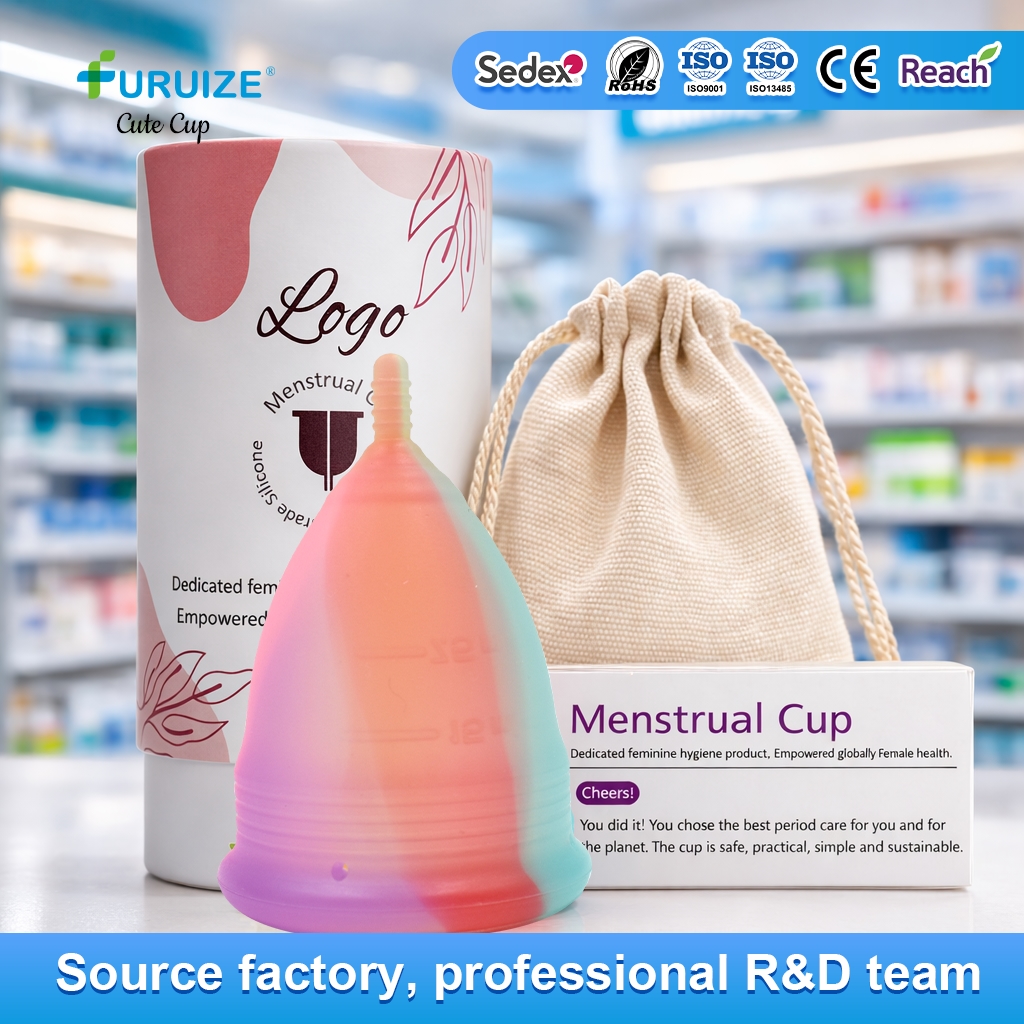
Side-by-Side
Cup vs Disc Comprehensive Comparison
Menstrual cups and discs both collect flow inside the body with reusable medical silicone — but different physics. Cups seal with vaginal suction below the cervix; discs rest in the fornix behind the pubic bone without suction. Xi'an Furuize Biotechnology Co., Ltd. manufactures both for global OEM brands. Insertion tutorials on how-to-use; sizing on size-guide.
| Dimension | Menstrual Cup | Menstrual Disc |
|---|---|---|
| Retention mechanism | Suction + vaginal wall pressure | Pubic bone shelf hook |
| Typical placement | Lower vaginal canal, below cervix | Deeper, posterior fornix |
| Removal interface | Stem pinch, break seal, wiggle out | Finger hook on anterior rim |
| Insertion angle | Often downward / posterior | Backward-downward tuck |
| Capacity range | ~15–40 ml by size tier | ~32–55 ml common tiers |
| Size sensitivity | Diameter + height critical | Bowl depth + rim flex; "one size" more common |
| Learning curve | Pop-open + seal skill | Tuck + hook removal skill |
| Period sex (device in) | Generally removed first | Many designs allow wear (brand-dependent) |
| Auto-empty at toilet | No — manual removal | Yes on auto-dump models when seated |
| Bladder pressure reports | More common if oversized | Less suction-related pressure |
Fit Your Life
Usage Scenarios & Recommendations
Scenario-based selection beats generic "best product" lists. Match device physics to where you bleed, move, and empty — then confirm size tier on the size-guide.
Heavy flow + long shifts
Disc high-capacity tiers (45–55 ml) reduce emptying when tuck is mastered; cups with 35–40 ml work if cervix height allows.
Low cervix & bladder sensitivity
Short-body cups often outperform discs for limited internal length — try cup first if cervical bumping occurs.
Athletes & high movement
Firm-rim cups with confirmed seal pre-workout; discs appeal with no stem — many athletes own both formats.
First-time tampon converts
Tampon-familiar users sometimes adopt discs faster; cup-curious users may prefer tactile stem checks. See beginner guide.
Mess-free period sex
Disc category wins when brand IFU permits wear during intercourse — verify per SKU, not all discs are designed for it.
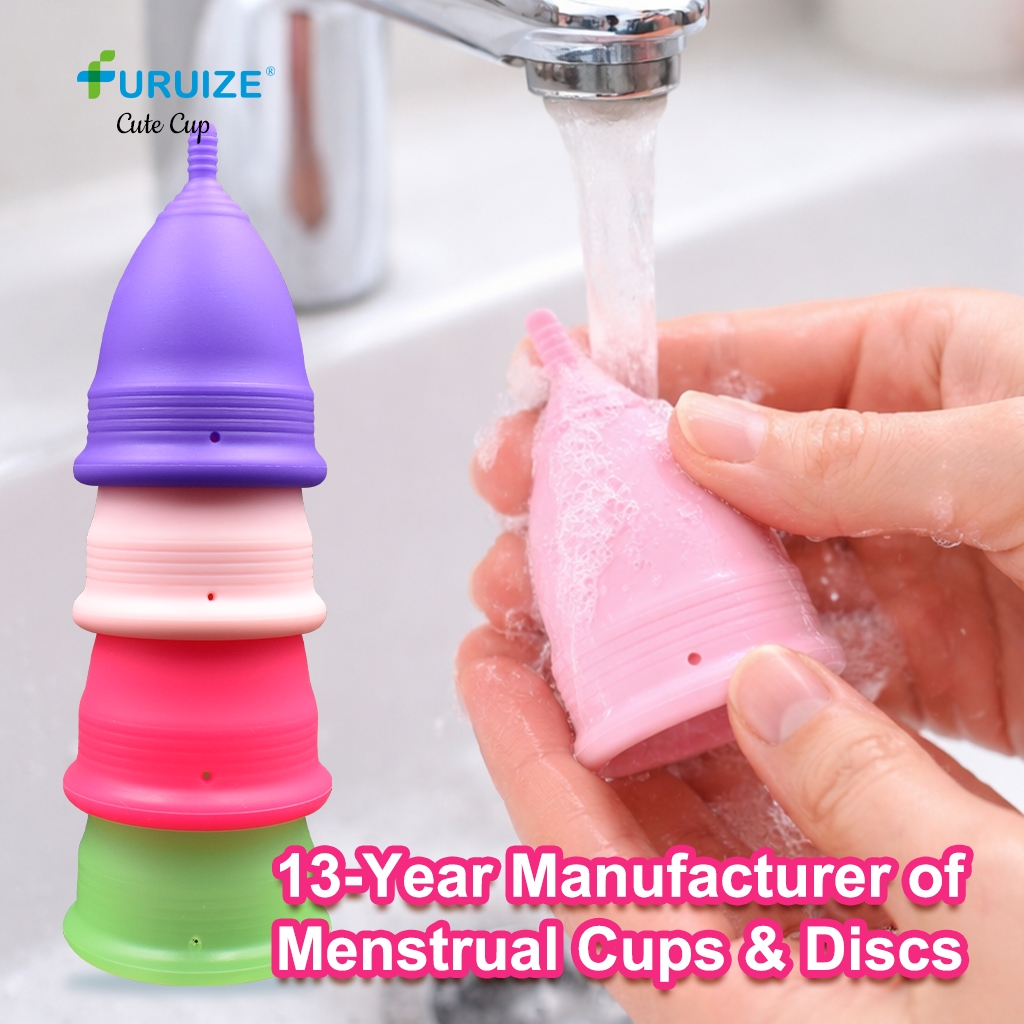
Scenario Matrix
Usage Scenario Guide
Heavy Flow + Long Shifts
Disc high-capacity tiers reduce emptying frequency when tuck is mastered. Cups with verified 35–40 ml sizes work if cervix height allows tall bodies.
Low Cervix & Bladder Sensitivity
Short-body cups or smaller diameters often outperform discs for users who feel cervical bumping with deep devices.
Athletes & High Movement
Cups with firm rims succeed when suction seal is confirmed pre-workout. Discs appeal when users want no stem and stable tuck during running.
First-Time Convert from Tampons
Tampon-familiar users sometimes adopt discs faster. Budget beginner kits with backup liners regardless.
Mess-Free Period Sex Priority
Disc category wins when brand IFU explicitly permits wear during intercourse. Cups are removed beforehand in most workflows.
Public Restroom Minimalism
Auto-dump discs empty partially without full removal in some stalls. Cups require removal and rinse when changing.
Engineering Demands
Material & Performance Comparison
Cups and discs often share the same medical-grade LSR from Furuize — performance divergence comes from geometry-driven engineering targets, not mystery material formulas. Raw silicone qualification on silicone-material page.
Cup performance priorities
Rim roundness for suction seal, wall thickness balance, stem tensile strength, vent hole clarity, compression set after boil cycles.
Disc performance priorities
Rim flex modulus for pubic-bone tuck, bowl depth vs. fornix clearance, auto-dump notch durability, finger-hook tear resistance.
Durometer mapping
Cups span soft teen to firm sport via LSR formulation; discs often use higher rebound in rim ring while keeping bowl supple.
Testing emphasis
Furuize testing-lab weights stem-pull for cups; disc lines add rim flex cycle and posterior lip leak-bench — detail on testing lab.
Lifespan & failure modes
Cups fail at stem junctions or vent holes; discs at rim nicks from hook removal. Both last years with approved care.
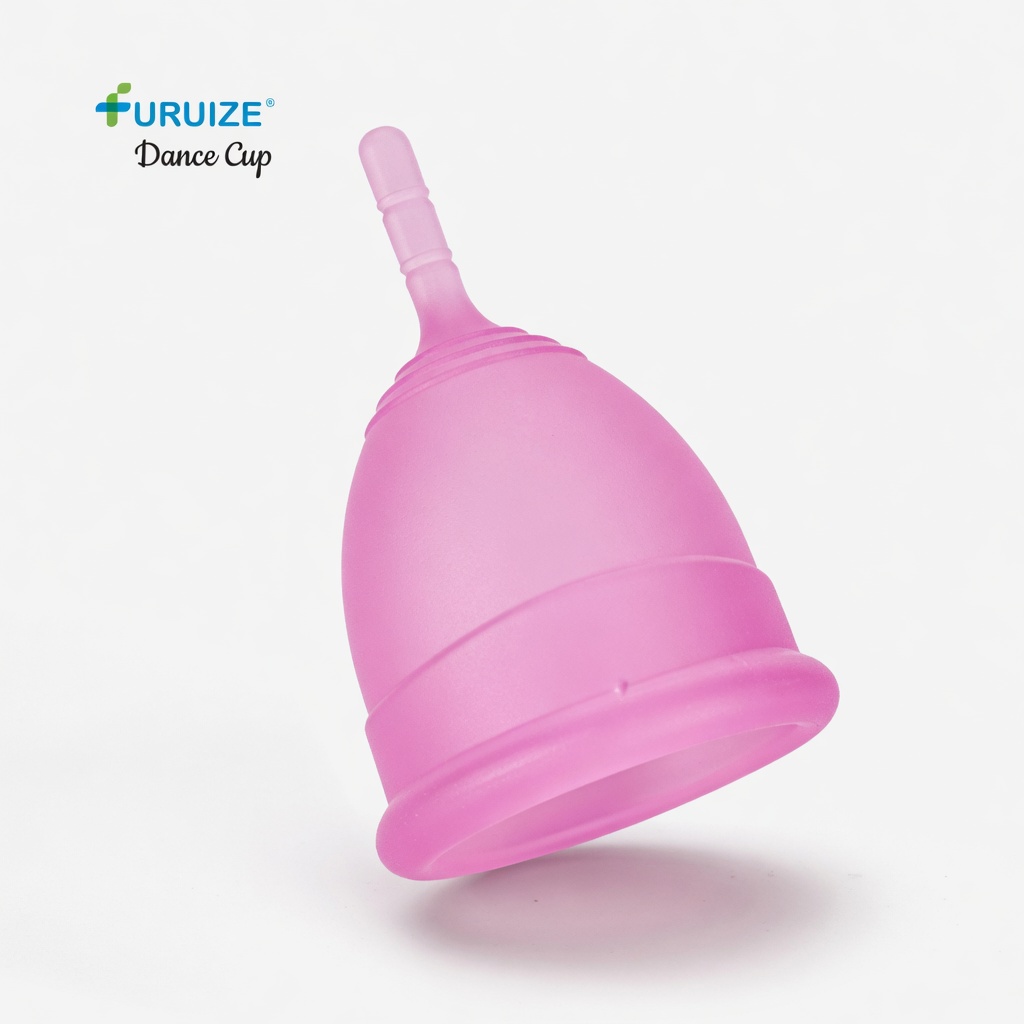
Total Economics
Cost & Value Analysis
Upfront shelf price tells a fraction of the value story. Total cost of ownership spans purchase price, accessory kits, learning-cycle backup, replacement timing, and avoided disposable spend.
Consumer retail bands
Entry cup USD 15–25; premium kit USD 28–40; standard disc USD 20–32; duo bundles USD 35–55 vs. USD 8–15 monthly disposables.
Five-year TCO sketch
Tampons/pads ~USD 480–900 cumulative; one quality cup or disc USD 20–40 — break-even often inside 4–8 months of committed use.
Hidden value variables
Disc auto-dump saves workplace bathroom time; cup stem confidence lowers anxiety during learning months.
OEM brand economics
Similar silicone COGS bands — dual-SKU brands capture comparison shoppers. Portfolio breadth affects distributor negotiations via OEM solutions.
Value verdict
Choose cup for low-cervix fit and stem assist; disc for high capacity and auto-dump. Both win on year-two economics when technique sticks.
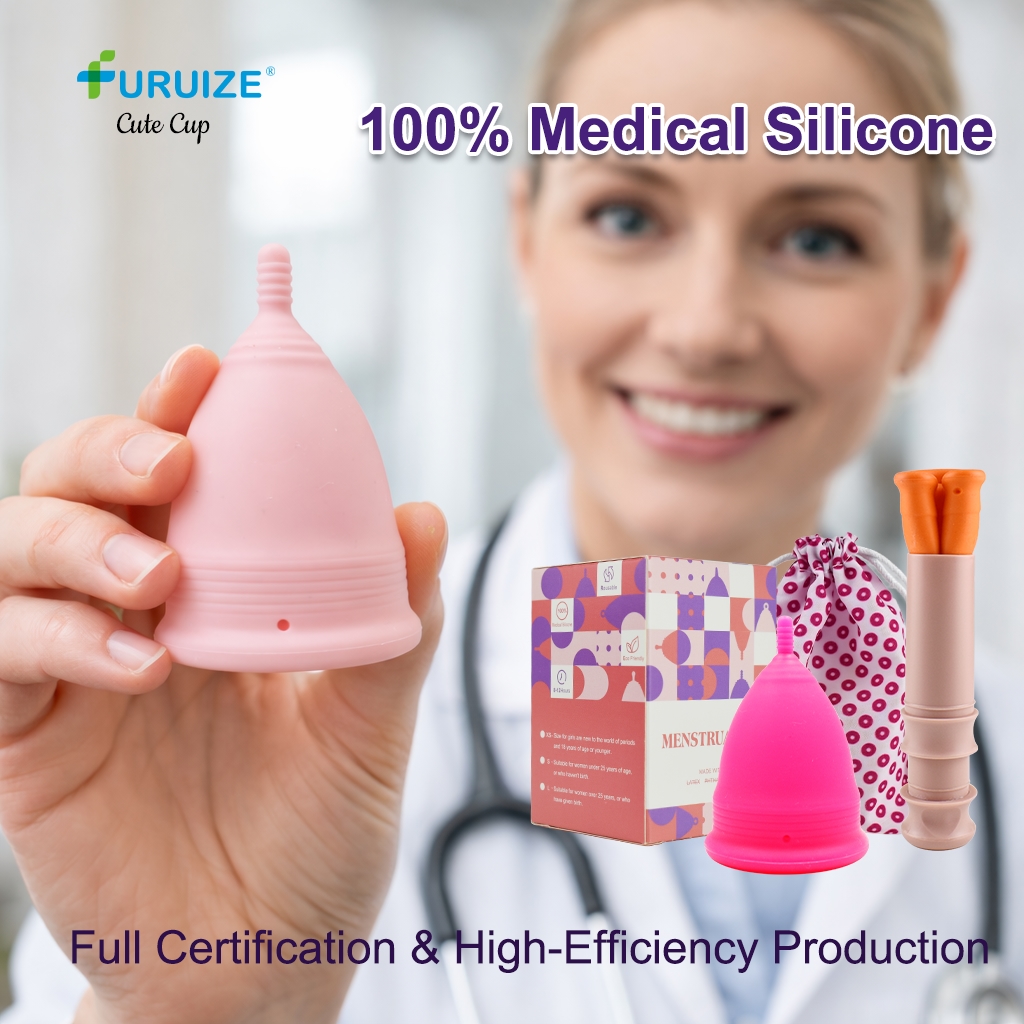
OEM Brand Resources
Launch & Manufacturing
Consumer Education (IFU Reference)
Cup vs Disc FAQ
Menstrual cup vs disc — which has higher capacity?
Discs often hold more volume in a flat profile; cups vary by diameter and height — see capacity section above. OEM sizing: size guide.
Which format is easier for beginners?
Depends on anatomy and learning style — cups offer stem feedback; discs suit high-capacity and auto-dump preferences. Start with beginner guide.
Can an OEM brand launch both cup and disc SKUs?
Yes — dual-format lines capture comparison shoppers. Catalog: cups and discs; strategy via OEM solutions.
Does format choice affect MOQ at Furuize?
Similar silicone COGS bands — typical from 500 units/SKU on catalog molds; new geometry may need 500+ for dedicated tooling.
Explore Cups and Discs from Furuize
OEM manufacturing for both formats — launch the right product mix for your market.