· Furuize Team · Sourcing Guide · 8 min read
How to Vet a Menstrual Cup OEM Supplier — Factory Audit Checklist for B2B Buyers
A 40-point factory audit framework for brands evaluating menstrual cup and disc manufacturers. Covers QMS, mold traceability, certificate verification, sample protocols, and red flags before signing PO.

Choosing a menstrual cup or disc contract manufacturer is a regulatory and brand-risk decision — not a price-comparison exercise on a marketplace listing. A low unit quote from an undocumented silicone molder can cost far more than factory-direct pricing from an ISO 13485–certified partner once you factor pharmacy delistings, Amazon document holds, batch recalls, and the eighteen-month timeline to rebuild technical files after a forced factory switch.
This guide is written for B2B buyers: private-label founders, procurement managers at pharmacy chains, Amazon aggregators, and regional distributors evaluating Xi’an Furuize Biotechnology Co., Ltd. or any alternative OEM. It does not teach consumers how to use cups; it teaches your quality and sourcing team how to audit factories before mold deposits and packaging artwork lock.
Why Supplier Vetting Is Non-Negotiable in 2026
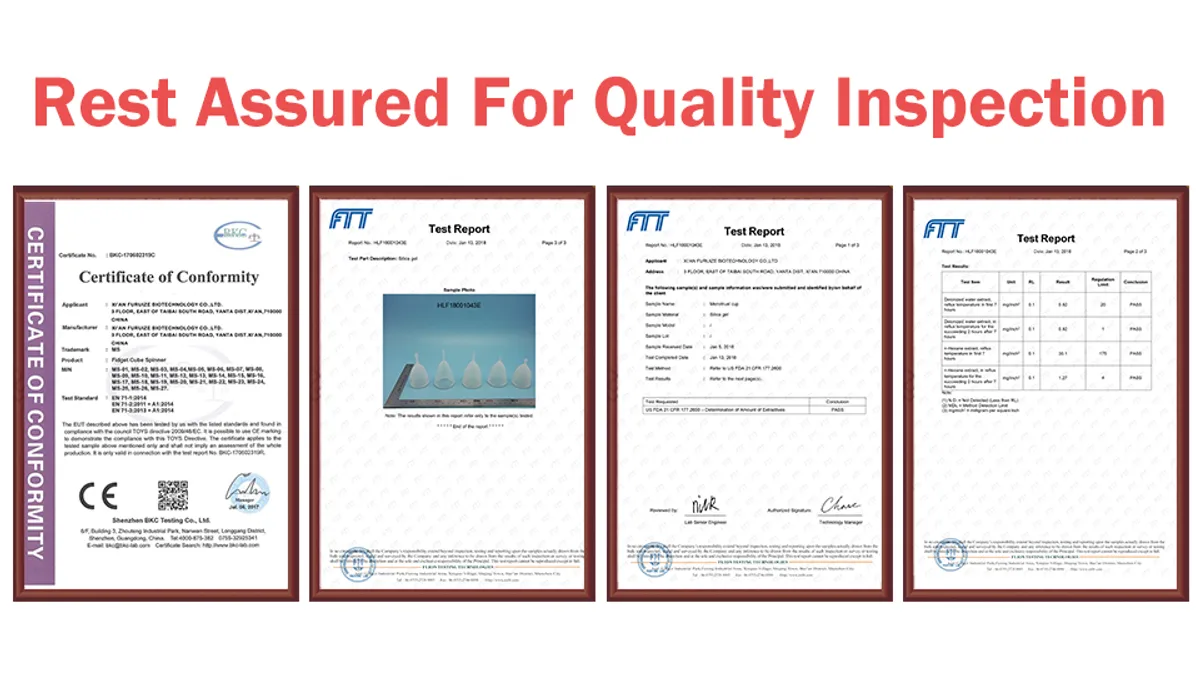
Reusable internal devices sit at the intersection of medical device expectations and consumer retail velocity. EU MDR enforcement, US marketplace chemical documentation, and pharmacy vendor portals all converge on the same question: can you prove this SKU was manufactured under control? Trading companies reselling undocumented cups cannot answer that question. Manufacturers with scope-limited ISO certificates and Photoshop test reports fail the first serious due-diligence email.
Vetting protects three B2B assets:
- Market access — Without verifiable QMS and test evidence, listings stall and imports hold.
- Brand equity — Complaint spikes from material drift destroy DTC reviews and retail authorizations.
- Capital efficiency — Mold and packaging spend is sunk cost if the factory cannot maintain conformity across reorders.
Deep certification architecture for Furuize is documented on our ISO 13485, CE, FDA, and SGS pages. This article focuses on how you evaluate any supplier, including us, without accepting marketing PDFs at face value.
Video: Factory Audit Mindset (5-Minute Overview)
Watch Furuize factory and manufacturing videos on YouTube
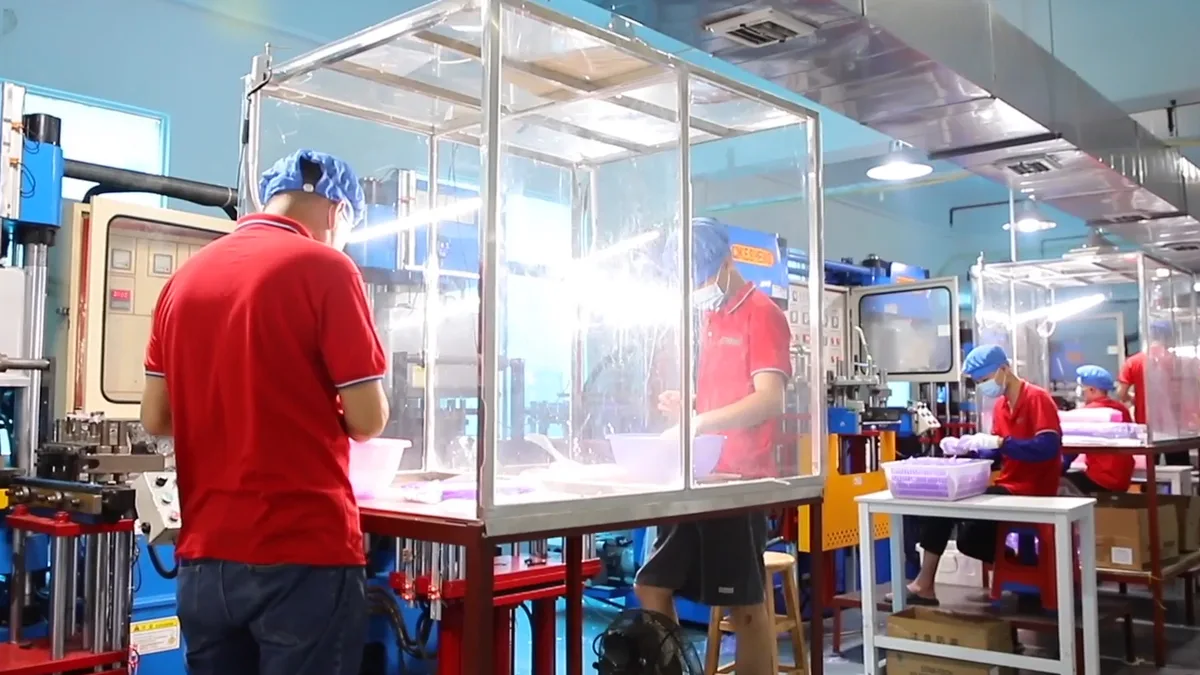
For a structured virtual tour of production zones, also see our factory tour and production process pages before an on-site visit.
Phase 1 — Desktop Due Diligence (Before You Fly to China)
Desktop review filters out 60–70% of unsuitable respondents before you spend travel budget. Request a data room index within ten business days of NDA signature.
Core Document Request List
| Document | What you verify | Pass signal | Fail signal |
|---|---|---|---|
| ISO 13485 certificate + scope statement | Menstrual cup/disc manufacture included | Scope explicitly lists device category | Scope is “plastic injection” only or expired |
| ISO 13485 registrar accreditation | CB is accredited, not self-printed | Registrar name matches IAF lookup | No registrar contact or “internal ISO” |
| FDA establishment registration summary | Legal manufacturer address matches factory | Address aligns with audit visit site | Registration absent or different city |
| CE certificate / Declaration template | Notified body number verifiable | NB listed for Class IIa devices | CE “certificate” without NB for Class IIa |
| SGS / ISO 10993 report index | Report numbers, dates, sample lots | Reports match SKU material family | Generic PDF JPEG with no lab metadata |
| Device Master Record sample | Controlled rev table, mold IDs | DMR index per SKU with owners | ”We have quality system” with no DMR |
| Supplier quality agreement draft | CAPA, complaint SLA, change control | Written OEM change-notification rules | Verbal “we will inform you” only |
| Business license + export record | Entity matches contract signer | 10+ years manufacturing entity | Trading company license, no production capex |
Ask for sanitized DHR excerpts from a recent lot — not a marketing brochure. You are validating traceability grammar: lot code → mold shot → material lot → release test.
Trading Company vs. Factory — Quick Signals
| Signal | Real manufacturer | Trading intermediary |
|---|---|---|
| MOQ narrative | Discusses mold cavitation and FAI | Only quotes “500 pcs any color” |
| Technical questions | Routes to engineering within 48h | Sales rep guesses durometer |
| Sample lead time | Ties to mold schedule / cleanroom slot | ”Ship tomorrow” for every SKU |
| Certificate holder | Manufacturer name on ISO scope | Certificate name ≠ invoice entity |
| Video tour | Shows presses, cleanroom, lab | Showroom shelf only |
Phase 2 — The 40-Point Audit Checklist
Use scoring: 0 = missing, 1 = partial, 2 = robust. Require ≥70/80 for pharmacy-tier projects; ≥60/80 may suffice for controlled wholesale with your importer owning vigilance.
A. Quality Management System (10 items)
| # | Checkpoint | Evidence to inspect |
|---|---|---|
| A1 | ISO 13485 certificate current, scope includes cups/discs | Wall certificate + electronic copy |
| A2 | Management review minutes within last quarter | Signed minutes with actions |
| A3 | Internal audit schedule covering 12-month cycle | Audit plan + closed findings |
| A4 | CAPA system with root-cause fields | Example closed CAPA from molding |
| A5 | Document control — obsolete SOPs removed from lines | Shop-floor SOP version matches master |
| A6 | Training matrix for operators affecting product safety | Job codes linked to SOP training |
| A7 | Supplier qualification for LSR and pigments | Approved vendor list with audit scores |
| A8 | Customer complaint coding taxonomy | OEM-complaint routing procedure |
| A9 | Post-market surveillance procedure exists | PMS plan template or PSUR index |
| A10 | Design change impact assessment process | Sample ECN for color or mold change |
B. Production & Environmental Control (10 items)
| # | Checkpoint | Evidence to inspect |
|---|---|---|
| B1 | Dedicated LSR injection for medical devices | Press labels, material hoppers segregated |
| B2 | Mold ID traceability on travelers | Traveler shows mold + shot count |
| B3 | Environmental monitoring in finishing area | Cleanroom or controlled area logs |
| B4 | IQC for silicone lots with COA match | Incoming test records last 3 lots |
| B5 | In-process inspection routes defined | Route card with critical dimensions |
| B6 | Nonconforming material segregation | Red-tag hold area, no commingling |
| B7 | Golden sample program per active mold | Sealed reference parts dated |
| B8 | Calibration system for CMM / durometer | Stickers linked to certificates |
| B9 | Packaging line cleanliness controls | Kitting SOP, foreign object checks |
| B10 | Lot release authority defined | Signed release record per batch |
C. Product Verification & Lab (10 items)
| # | Checkpoint | Evidence to inspect |
|---|---|---|
| C1 | In-house mechanical test capability | UTM or stem-pull fixture in use |
| C2 | Gravimetric capacity verification method | Protocol tied to DMR capacity claim |
| C3 | Biocompatibility plan aligned ISO 10993 | Plan version cited in technical file |
| C4 | Third-party SGS reports indexed | Report numbers on material change matrix |
| C5 | OOS investigation procedure | Example lab deviation record |
| C6 | Retain samples per lot with location | Retain shelf map + retention period |
| C7 | Disc leak bench or equivalent functional rig | Data for disc SKUs if applicable |
| C8 | Pigment change triggers biological re-eval | Written trigger table |
| C9 | Stability / boil-cycle validation on file | IFU reprocessing claim support |
| C10 | CoA template matches shipped lot codes | COA from same week as visit |
D. Regulatory & OEM Interface (10 items)
| # | Checkpoint | Evidence to inspect |
|---|---|---|
| D1 | DMR / DHR structure per OEM SKU | Index walkthrough for your project |
| D2 | UDI assignment process if EU-bound | UDI-DI procedure or sample label |
| D3 | Label artwork review workflow | Regulatory sign-off before print |
| D4 | OEM NDA and confidentiality practice | Client mold segregation policy |
| D5 | Export document bundle consistency | Invoice + COA + report alignment |
| D6 | Serious incident escalation SLA | Contract clause draft |
| D7 | Intellectual property for client molds | Mold ownership clause |
| D8 | Capacity realism vs. your forecast | Production plan without overpromise |
| D9 | Business continuity / dual-line plan | Backup power or shift model |
| D10 | Reference customers willing to confirm | Two verifiable OEM references |
Phase 3 — On-Site Factory Visit Agenda (1.5 Days)
Day 1 morning — QMS & document room
- Open CAPA, complaint, and change-control examples
- Trace one lot from traveler to COA to retain sample
- Confirm certificate scope addresses device manufacturing, not only “assembly”
Day 1 afternoon — Production floor
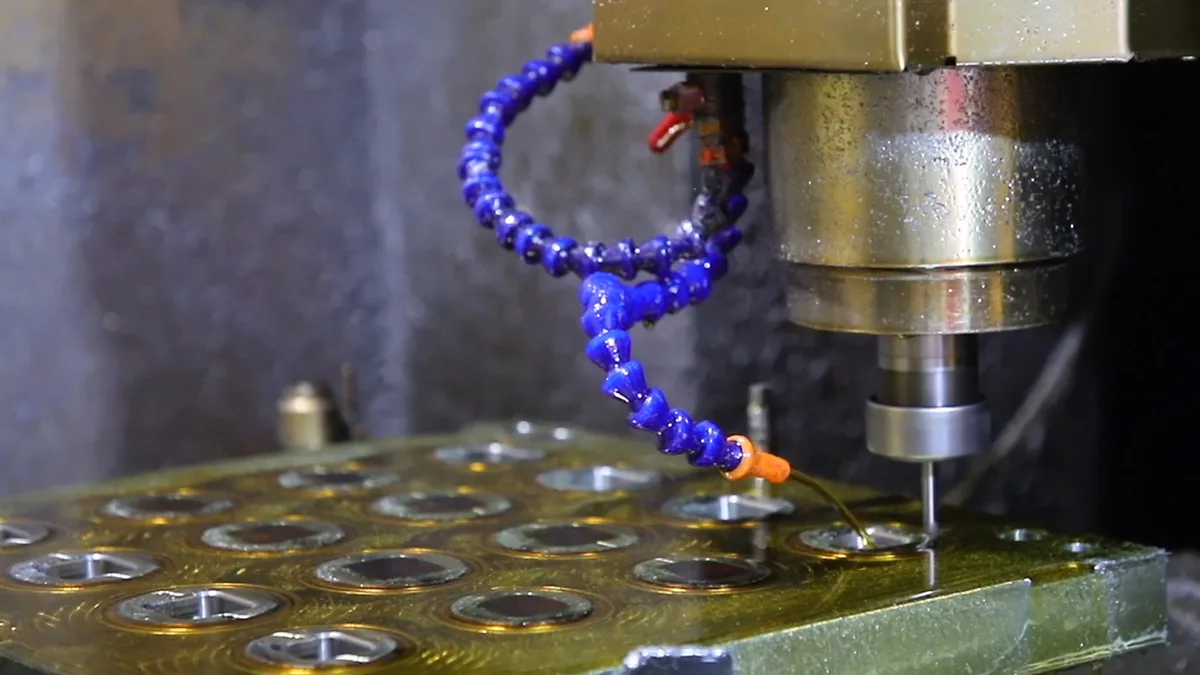
- Follow LSR dosing → molding → trim → finishing → kitting without shortcuts
- Verify mold ID on press matches traveler you traced
- Interview operator on hold criteria (language barrier OK if supervisor translates accurately)
Day 2 morning — Lab & retain store
- Witness stem-pull or capacity check demonstration
- Review calibration due list — overdue items are automatic minor nonconformity
- Inspect retain sample storage conditions
Day 2 afternoon — Executive & commercial close
- Align MOQ, mold ownership, lead times, and evidence update cadence
- Agree pilot PO success criteria before mass PO (AQL, dimensional Cpk, complaint threshold)
Red Flags That Should Pause or Terminate Negotiations
| Red flag | Why it matters |
|---|---|
| Refusal to provide registrar contact for ISO verification | High fraud probability |
| CE mark offered without notified-body path for Class IIa | Illegal EU placement risk |
| ”FDA approved” language on factory website | Misleading — registration ≠ product approval |
| Sample not traceable to documented production lot | Cannot validate FAI integrity |
| Same biocompatibility report for unrelated client mold | Evidence reuse without justification |
| No engineering staff in meeting, only sales translators | ODM changes will fail later |
| Mold steel owned by factory with no exit clause | Hostage pricing on reorders |
| Pressure to pay 100% before FAI approval | Cash flow risk on unproven geometry |
Sample Evaluation Protocol (Before Bulk PO)
- Receive FAI units with traveler copy redacted for other clients.
- Measure rim OD, capacity, stem pull per your spec sheet — compare to testing lab style protocols.
- Run boil sterilization cycle per IFU draft; re-test durometer and stem junction.
- Submit identical material plaque to your own third-party lab if pharmacy tier — compare to factory SGS report numbers.
- Document results in your vendor qualification record; only then release packaging artwork.
How Furuize Supports B2B Due Diligence
We expect sophisticated buyers to verify rather than trust slogans. Typical Furuize onboarding deliverables include:
- Sanitized ISO audit summary and certificate scope excerpt
- FDA establishment registration verification letter under NDA
- CE technical-file table of contents template for your SKU
- SGS report index mapped to material families
- Pilot PO quality agreement with CAPA and complaint SLAs
- Cross-links to controlled consumer education (size guide, how to use) for your brand kitting
Request a supplier audit packet through our contact page or begin solution scoping on OEM solutions.
Audit Scorecard Template (Copy for Internal Use)
| Section | Max score | Your score | Notes |
|---|---|---|---|
| A. QMS | 20 | ||
| B. Production | 20 | ||
| C. Verification | 20 | ||
| D. Regulatory/OEM | 20 | ||
| Total | 80 |
Decision bands
- 72–80: Approved for pharmacy / multi-market launch
- 60–71: Approved with corrective action plan and earlier re-audit
- Below 60: Do not place mold PO; seek alternate manufacturer
Conclusion
Vetting a menstrual cup OEM supplier is repetitive, document-heavy work — and that is the point. Regulators and marketplace compliance teams reward buyers who can trace a listed SKU to a controlled lot, not buyers who chased the lowest Alibaba unit price. Use this checklist uniformly across candidates, including Furuize, so your board and investors see comparison discipline rather than relationship bias.
When desktop review passes and on-site scoring exceeds your threshold, transition to SKU portfolio planning and regulatory pathway articles in this series — or engage our account team for a pilot mold program with FAI gates before your seasonal inventory commit.