· Furuize Team · Sourcing Guide · 8 min read
How to Choose a Menstrual Cup Supplier — RFQ Scorecard & Decision Framework
Selection framework before factory audit — factory vs trader, OEM vs custom mold, MOQ tiers, geography, and contract terms. Includes copy-paste RFQ scorecard for shortlisting menstrual cup manufacturers.
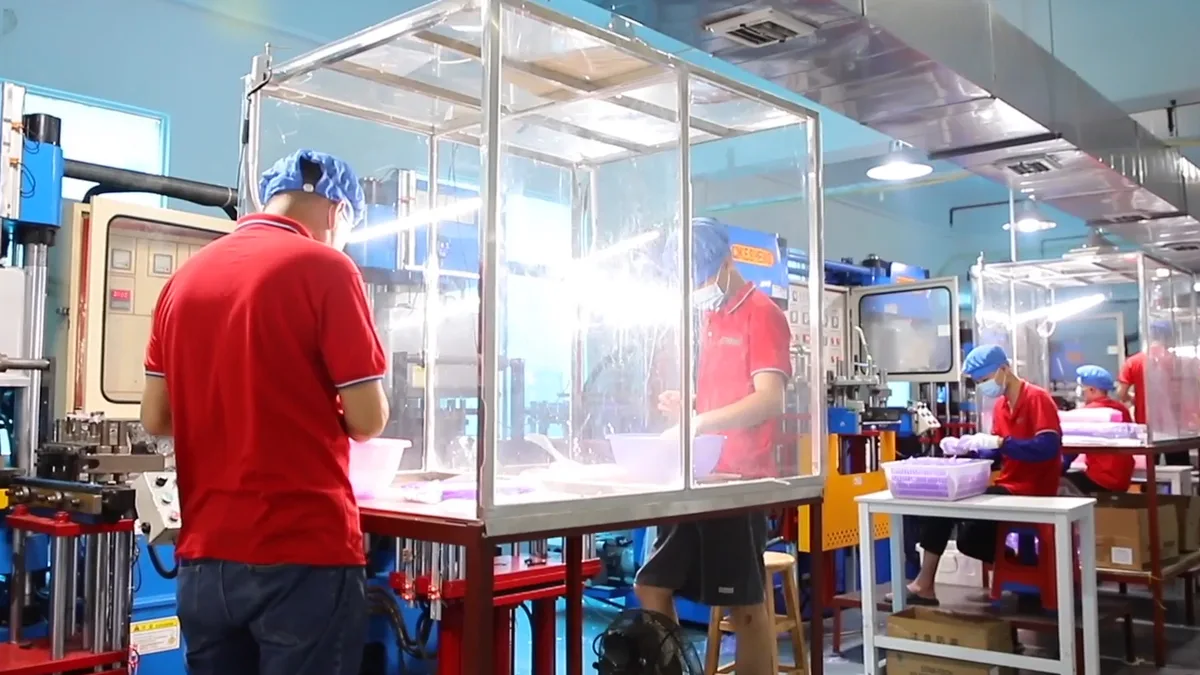
The wrong supplier choice shows up months later — as an Amazon document hold, a pharmacy delisting, or a mold that cannot be transferred when the factory ghosts you. Choosing a menstrual cup manufacturer is different from vetting one: selection narrows the field using RFQs, commercial fit, and capability signals; vetting proves claims with audits and certificate verification. Skipping selection and jumping to price quotes is how brands sign with trading companies that subcontract undocumented workshops.
This guide helps procurement managers, founders, and distributors build a defensible shortlist before travel budgets and mold deposits commit. After shortlist approval, run the full factory audit checklist. Xi’an Furuize Biotechnology Co., Ltd. welcomes the same RFQ discipline from buyers evaluating us alongside alternatives.
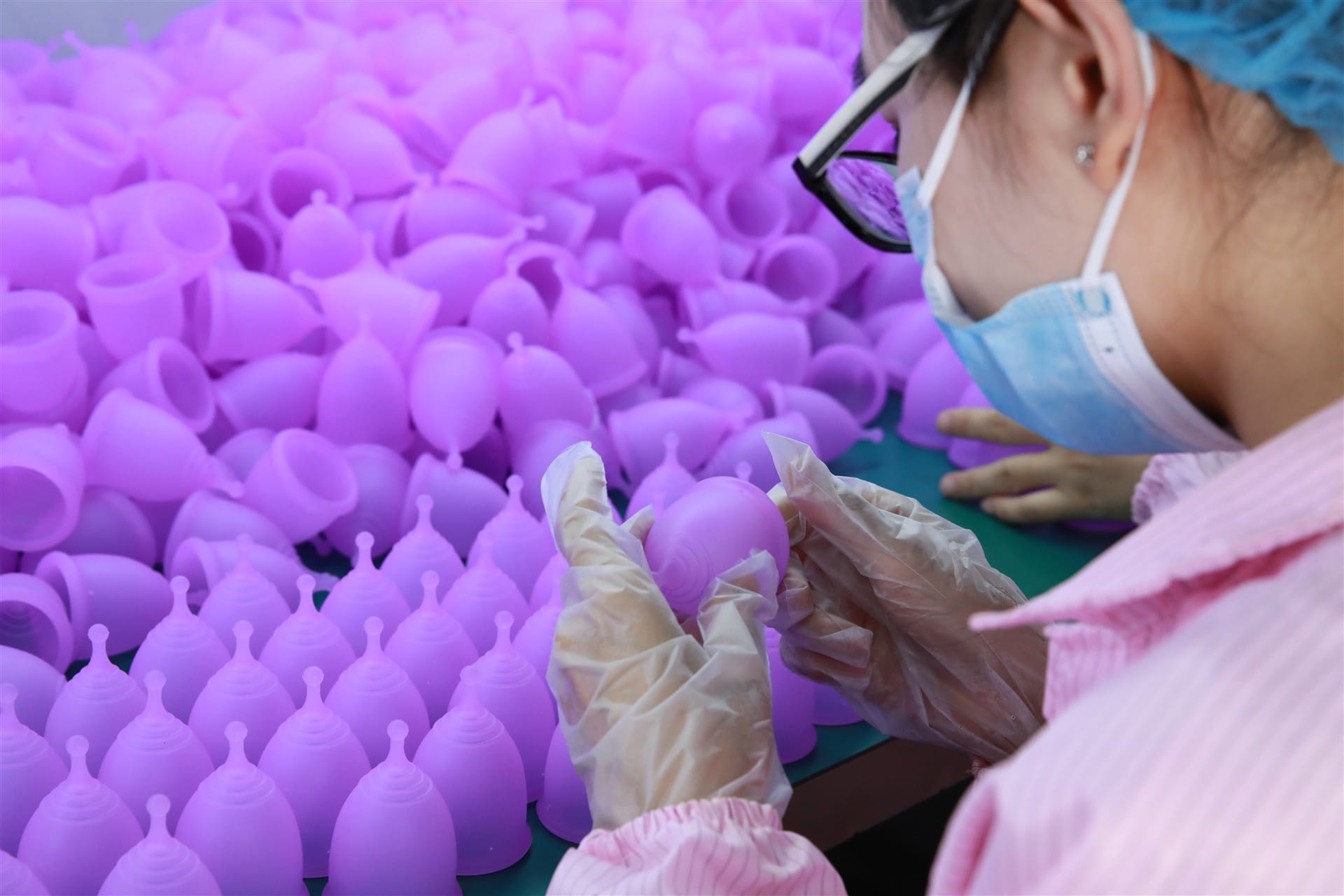
Selection vs. Vetting (Do Not Conflate)
| Phase | Question answered | Primary tools | Output |
|---|---|---|---|
| Selection | Who belongs on the shortlist? | RFQ, samples, cert desktop review | 2–3 finalists |
| Vetting | Can we trust the finalist? | On-site audit, lab confirm, CAPA history | Approved vendor |
| Onboarding | How do we launch SKUs? | FAI, packaging sign-off, doc pack | First PO |
Selection filters out 80% of marketplace noise. Vetting catches the remaining 20% that lie well.
Video: What Real Manufacturing Looks Like
Furuize YouTube channel — factory and process context
Cross-check video claims against clean room, silicone material, and factory tour documentation.
Supplier Archetypes (Know What You Are Buying)
| Archetype | What they are | Typical price | Risk profile | When acceptable |
|---|---|---|---|---|
| ISO-certified OEM factory | Owns molds, LSR lines, QMS | Mid | Low–medium | Pharmacy, Amazon, EU |
| ODM catalog factory | Off-the-shelf geometries | Low–mid | Medium | Fast wholesale test |
| Trading company | Brokers unknown plants | Low | High | Never for regulated markets |
| Design house + subcontract | Outsourced production | Mid–high | Medium–high | Only with disclosed plant |
| Regional repacker | Imports bulk, relabels locally | Mid | Medium | Mature cert chain required |
Rule: For US, EU, UK, pharmacy, or Amazon primary channels, require direct factory relationship with auditable production address — not a suite number that forwards POs.
Step 1: Define Your Requirement Brief (Before RFQ)
Send identical briefs to every candidate. Include:
- Target markets — US only, EU+UK, GCC wholesale, etc.
- SKU count year 1 — Reference SKU portfolio strategy
- Format — Cup, disc, or dual (comparisons)
- Customization level — Private label on catalog mold vs. new steel (mold development)
- Volume forecast — 3k, 10k, 30k annual units per SKU
- Compliance tier — Marketplace, pharmacy, or distributor neutral
- Packaging — Pouch, carton, blister (packaging OEM)
- Required documents — ISO scope, FDA reg, CE file TOC, SGS index
Vague RFQs (“best price menstrual cup 5000 pcs”) attract traders.
Step 2: RFQ Scorecard (Weighted)
Score each supplier 1–5 per criterion. Weights reflect regulated OEM reality.
| Criterion | Weight | Score 5 looks like | Score 1 red flag |
|---|---|---|---|
| Factory direct proof | 15% | Video walk-through, business license matches plant | Refuses address / NDA dodge |
| ISO 13485 scope | 15% | Certificate lists menstrual device manufacturing | ISO 9001 only or expired |
| Regulatory evidence | 15% | CE TOC + FDA letter + SGS mapped to LSR grade | PDF thumbnails only |
| Mold ownership clarity | 10% | Written mold ownership / transfer terms | ”Mold belongs to factory always” |
| MOQ / pricing ladder | 10% | Transparent tiers at 500/3k/10k/30k | Single fake low MOQ |
| Lead time honesty | 10% | 25–45 days production + ship buffer | ”7 days mass production” |
| OEM service depth | 10% | IFU draft, packaging design, education packs | Product-only, no RA support |
| English / project management | 5% | Dedicated PM, CAPA contact | Chat-only, inconsistent |
| Sample policy | 5% | Paid sample credited to PO, dimensional report | Free sample, no spec sheet |
| Reference willingness | 5% | Sanitized reference under NDA | ”Cannot disclose any client” |
Weighted total interpretation
- 4.2+ — Finalist; schedule vetting audit
- 3.5–4.1 — Backup; fix gaps in writing before visit
- Under 3.5 — Reject; do not sample
Step 3: Certificate Desktop Review (Same Day as RFQ)
Before paying for samples, verify:
| Document | Verify |
|---|---|
| ISO 13485 | Issuer, scope line, expiry, facility name |
| CE declaration | Matches intended device class pathway |
| FDA establishment | Number matches legal manufacturer on COA |
| SGS reports | Material grade, batch, test date, standard cited |
| Business license | Legal entity = production entity |
Use our ISO, CE, FDA, and SGS pages as reference architecture — then demand equivalents from every candidate.
Anti-fraud quick checks
- Certificate PDF properties vs. claimed issuer
- Scope line mentions “menstrual” or “medical silicone device” — not just “rubber products”
- Phone verification to notified body or registrar (not number on PDF only)
Step 4: Sample Evaluation Protocol
Order identical spec samples from finalists — same rim OD target, softness, color, stem design.
| Test | Method | Pass threshold |
|---|---|---|
| Dimensional | Caliper vs. quoted spec | Within agreed tolerance band |
| Capacity | Water fill to vent holes | Within 5% of claimed ml |
| Durometer | Shore A on cup body | Matches approved plaque |
| Boil cycle | Per draft IFU 5 min × 3 | No tear, stem intact |
| Odor / bleed | 24h water soak | No dye bleed on white towel |
| Packaging mock | Drop test 1m | No seal breach |
Document with photos and lot sticker if provided. Compare to testing lab norms.
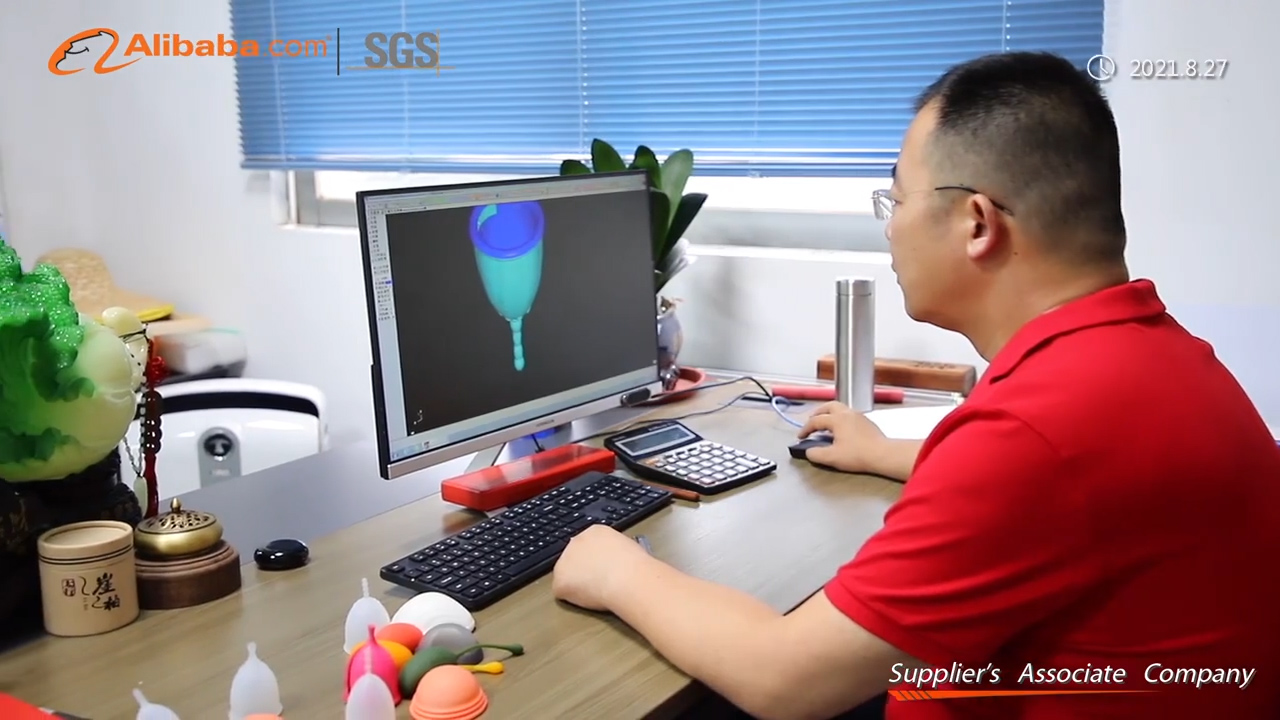
Factory vs. Trading Company — Detection Signals
| Signal | Real factory | Trading company |
|---|---|---|
| RFQ response time | Technical answers in 48–72h | Instant rock-bottom price |
| Audit invitation | Sets date, sends safety briefing | Delays, “video enough” |
| Sample lead time | 7–15 days with process report | 3 days, no dimensions |
| Mold discussion | Steel vendor, cycle time, cavities | Vague “we open mold” |
| Visit address | Industrial zone, guards, production noise | Office tower, no plant |
Insist on video call walk-through with live timestamp before international travel.
OEM Catalog vs. Custom Mold — Selection Logic
| Factor | Catalog OEM (ODM) | Custom mold |
|---|---|---|
| Upfront cash | Low | $3k–$15k+ per mold |
| Time to market | 4–8 weeks | 10–16 weeks |
| Differentiation | Low | High |
| Best channel | Wholesale neutral, test market | DTC, pharmacy house brand |
| Risk | Commodity look | Design flaw locked in steel |
Align with private label cost breakdown before choosing custom steel for unproven demand.
Geography: China OEM vs. Nearshore Alternatives
| Region | Strengths | Watch-outs |
|---|---|---|
| China (Xi’an, Guangdong) | LSR scale, supply chain, cost | Audit travel, IP clarity in contract |
| EU contract molder | RA proximity | Higher unit cost, fewer cup specialists |
| US repack / label | Speed to US shelf | Often still Chinese bulk — trace chain |
| Turkey / Eastern EU | EU logistics | Verify actual molding vs. import |
Most global cup volume still originates from experienced Chinese medical silicone OEMs — geography matters less than QMS depth and document integrity.
Commercial Terms That Belong in Selection
Negotiate framework before mold PO:
| Term | Brand-friendly target |
|---|---|
| Mold ownership | Brand owns steel after full payment |
| Change notification | 90-day notice on material grade |
| Exclusivity | Geography + channel carve-outs |
| Payment | 30/70 or LC at scale; avoid 100% upfront mold |
| CAPA SLA | Written response days on complaints |
| Capacity reservation | Q4 slot guarantee with forecast |
See ordering from China for Incoterms and payment patterns.
Shortlist Process (30-Day Template)
Day 1–3:   Publish requirement brief to 8–12 candidates
Day 4–10:  Desktop cert review → reject bottom half
Day 11–18: RFQ scorecard → 3 finalists
Day 19–28: Paid parallel samples + dimensional tests
Day 29–30: Selection committee pick #1 + backup #2
Day 31+:   Full vetting audit on #1 ([audit guide](/how-to-vet-menstrual-cup-oem-supplier))
Furuize as a Candidate (Apply the Same Scorecard)
We expect buyers to score us like any factory:
- Direct manufacturing in Xi’an with production process transparency
- ISO 13485 scope for medical device manufacturing
- Multi-market cert index on dedicated pages
- Mold programs via mold development with ownership clarity
- OEM packaging and branding on private label and wholesale tracks
Request RFQ response via contact with your requirement brief attached.
Common Selection Mistakes
| Mistake | Cost |
|---|---|
| Price-only ranking | Recall, relist, factory switch |
| Skipping sample dimensional | Return rate spike on Amazon |
| No mold ownership clause | Hostage steel at breakup |
| Accepting trader as “manufacturer” | Un traceable lots |
| Six-SKU RFQ before channel proof | Inventory write-off |
Pair selection with how to sell channel plan so SKU count matches commercial reality.
RFQ Email Template (Copy-Paste)
Subject: OEM RFQ — Menstrual Cup/Disc — [Brand] — [Markets]

We are evaluating manufacturers for [cup/disc/both], year-1 volume [X] units,
markets [US/EU/etc.], compliance tier [marketplace/pharmacy/wholesale].

Please provide:
1. Confirmation you are the manufacturing legal entity (address + license)
2. ISO 13485 certificate with scope excerpt
3. FDA establishment status and CE technical file support model
4. MOQ and unit price tiers at 500 / 3k / 10k / 30k
5. Sample cost, lead time, and dimensional report included
6. Mold ownership terms for custom geometry
7. Production lead time excluding Chinese New Year
8. Named project manager and CAPA contact

Deadline for response: [date].
Multi-Stakeholder Selection Committee
Avoid single-founder gut calls on factory PO. A lightweight committee prevents marketing from choosing traders because samples looked pretty, or finance from choosing un-auditable plants because unit price won Excel.
| Role | Votes on | Veto power |
|---|---|---|
| Founder / GM | Strategic fit, channel alignment | Commercial terms |
| QA / Regulatory | Cert scope, CAPA maturity | Yes on cert fraud |
| Operations | Lead time, MOQ realism | Yes on logistics impossibility |
| Finance | Payment terms, total cost | No on safety |
| Marketing | Packaging depth, education support | No on QMS |
Score finalists together in one workshop — do not email async scores that never reconcile.
Post-Selection Onboarding Checklist
Selection ends with a signed supplier intent letter — not a mold PO. Before steel cuts:
- Quality agreement draft with complaint routing and lot hold clauses
- Mold ownership exhibit signed
- Document index with revision numbers (ISO, CE TOC, SGS list)
- Pilot PO quantity and FAI dimensional template agreed
- Named PM on both sides with timezone overlap
- Escalation phone tree for production stops
Transition to full vetting audit within 14 days of intent letter — delays let traders substitute plants between sample and mass production.
Reference Checks Under NDA
Finalists should provide two sanitized references — brands or distributors in your target channel class. Ask references:
- Did COA arrive within 48h of ship consistently?
- Were material change notifications honored before lot switch?
- Did CAPA close within agreed days on stem junction complaints?
- Would they reorder during peak without air-freight panic?
A factory that cannot offer any reference is not pharmacy-ready regardless of certificate PDF quality.
Conclusion
Choosing a menstrual cup supplier is structured elimination — not relationship shopping on a trade show floor. Use a weighted RFQ scorecard, identical sample protocols, and certificate desktop review to reach two finalists, then invest audit dollars only where data supports approval. The best price from an unverifiable vendor is the most expensive quote after compliance failure.
Next steps: vet your finalist, model launch costs, and plan sales channels. Furuize publishes this framework so sophisticated buyers can compare us fairly — start on solutions.