· Furuize Team · Sourcing Guide · 7 min read
What It Costs to Build a Menstrual Cup Factory — Capex, Timeline, and Build vs OEM
Full capex model for a medical silicone menstrual cup manufacturing plant — cleanroom, LSR lines, molds, lab, ISO 13485, and staffing. Compares build vs contract OEM economics for brand founders and investors.

Every successful private-label cup brand eventually asks: should we own the factory? The fantasy is margin capture and control; the reality is ISO 13485 systems, cleanroom HVAC, LSR maintenance crews, and notified-body relationships that take years — not weeks — to stabilize. Building a menstrual cup plant is a medical device manufacturing investment, not a generic silicone workshop. Trading companies that rent assembly tables are not benchmarks.
This article models capex, opex, timeline, and break-even for a greenfield or brownfield cup/disc facility, then compares total cost of ownership (TCO) against partnering with an established OEM such as Xi’an Furuize Biotechnology Co., Ltd. It complements private label cost breakdown (brand launch) and supplier selection (OEM path) — written for founders, investors, and strategics evaluating vertical integration.

Why “Factory” Means Something Specific Here
Menstrual cups are molded from liquid silicone rubber (LSR) in controlled environments, post-cured, trimmed, washed, and packaged under QMS records suitable for FDA establishment registration, EU MDR technical files, and pharmacy audits. A facility that only assembles imported cups is a repack plant — different capex, different risk.
Minimum credible OEM factory includes:
- ISO 13485–aligned QMS (ISO certification context)
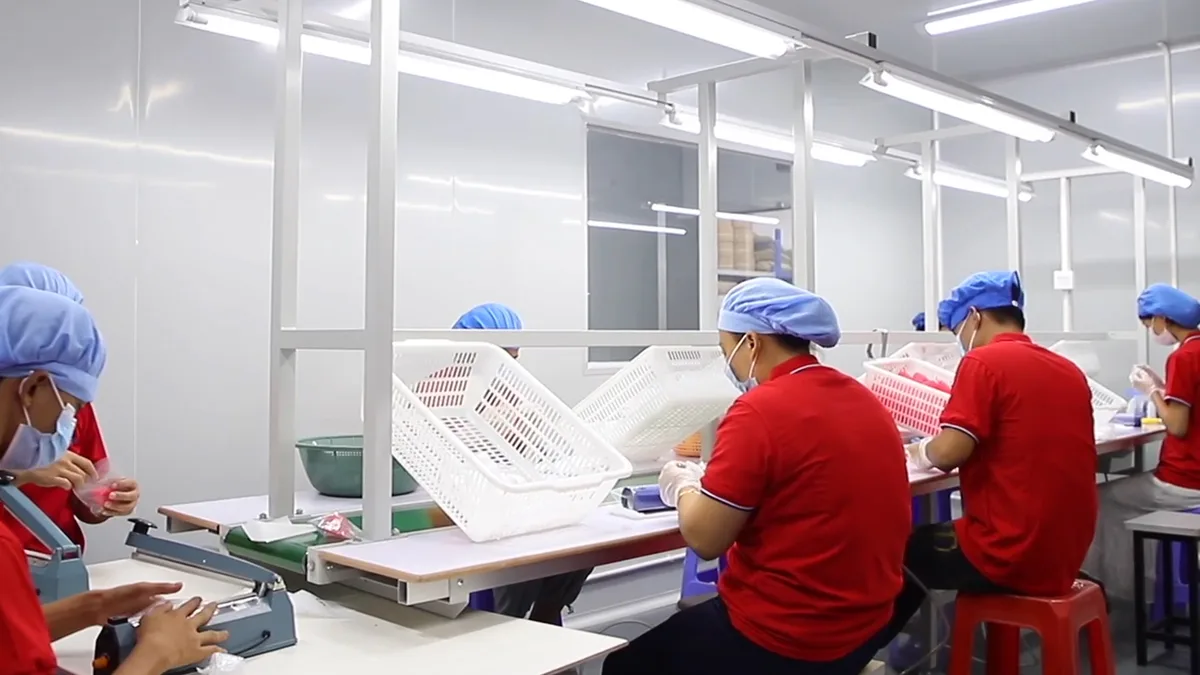
- Controlled production area (clean room)
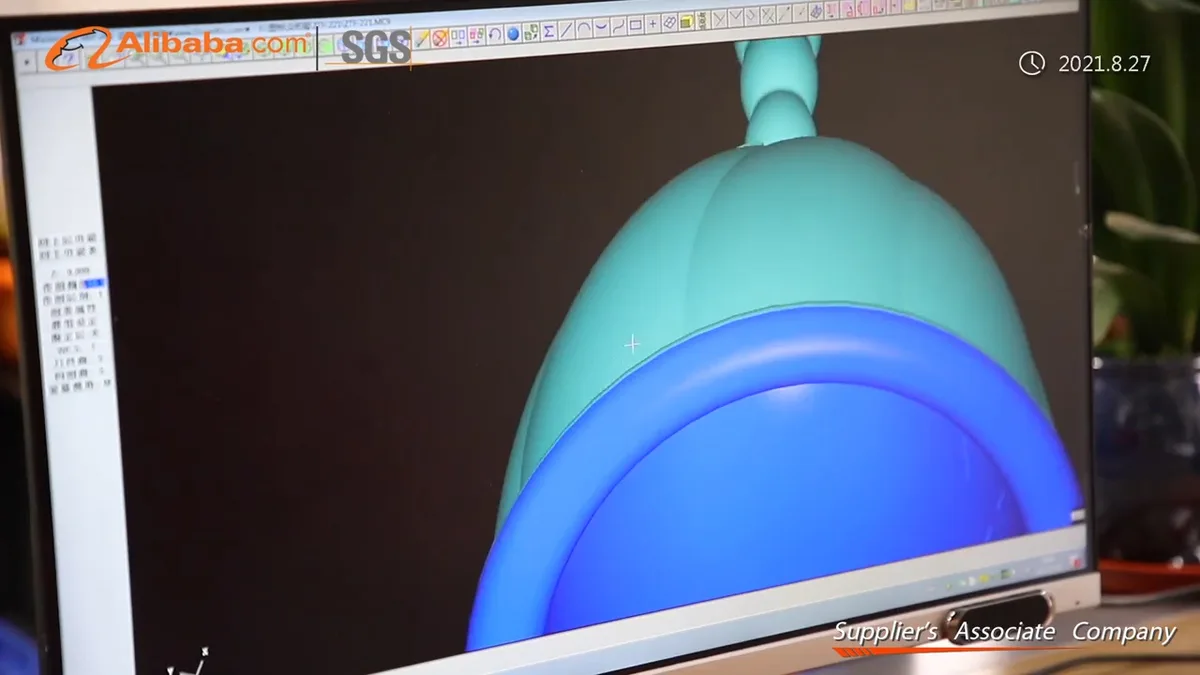
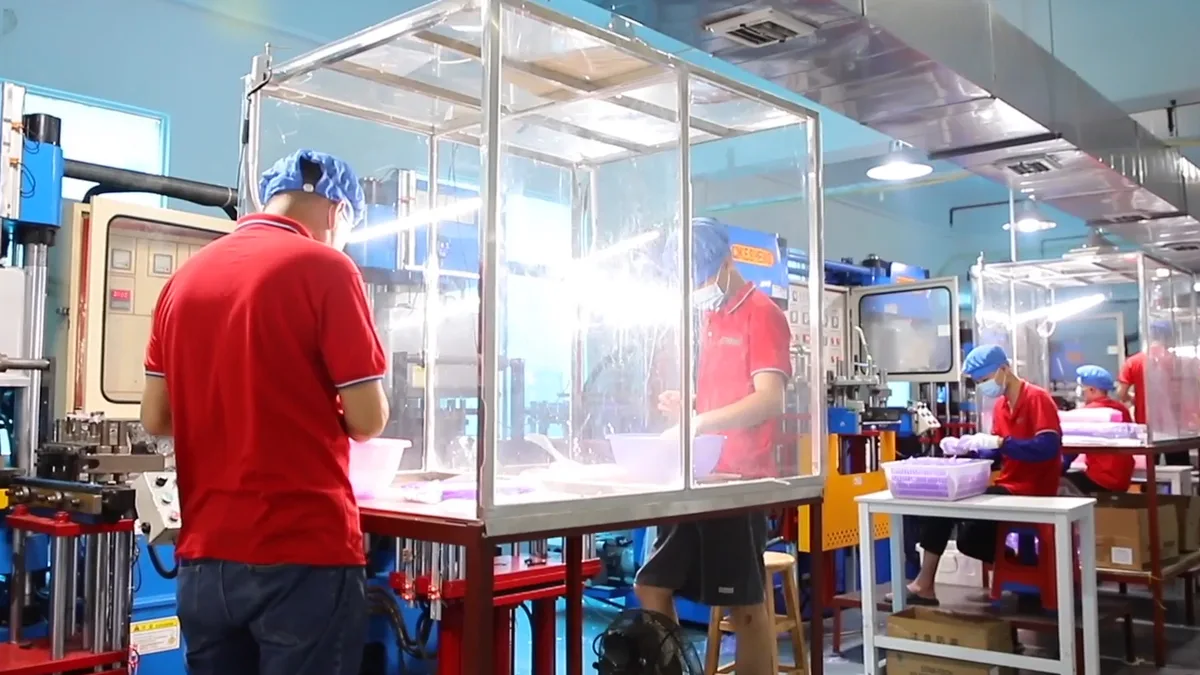
- LSR injection cells (production process)
- In-process and release QC (quality control)
- Material traceability and COA issuance
- Mold maintenance and steel storage
- Biocompatibility evidence chain (SGS, silicone material)
Video: Reference Architecture for a Cup Plant
Furuize YouTube — factory operations overview
Use alongside factory tour and testing lab pages as a benchmark layout — not as an invitation to copy equipment brands without validation.
Capex Buckets (Greenfield, China, 2026 Ranges)
Illustrative USD for a single-site plant targeting 2–8 million cups/year at steady state.
| Bucket | Low | High | What it includes |
|---|---|---|---|
| Land / lease fit-out | $200k | $800k | 3,000–8,000 m² industrial, utilities |
| Cleanroom build | $400k | $1.5M | ISO 8/7 zones, HVAC, monitoring |
| LSR molding lines | $600k | $2.5M | 4–12 cavities, feeders, chillers |
| Post-cure / ovens | $80k | $250k | Temperature mapping validation |
| Trim / wash / dry | $100k | $400k | Deburr, IPA wash lines |
| Packaging hall | $150k | $500k | Sealing, cartoning, print integration |
| Mold shop / toolroom | $120k | $400k | CNC, EDM, storage |
| QC lab | $150k | $600k | Durometer, vision, leak rigs |
| IT / MES / doc control | $50k | $200k | Lot trace, DMR |
| Certification consulting | $80k | $300k | ISO 13485, CE program setup |
| Working capital buffer | $300k | $1M | Silicone, payroll, 90-day runway |
| TOTAL GREENFIELD | $2.2M | $8.5M | Before mold library |
Mold library (customer + house tools): add $500k–$2M over 24 months for competitive SKU breadth.
Brownfield conversion of generic rubber plant: reduce cleanroom and building 20–35% if layout fits — rarely eliminates regulatory consulting.
OpEx (Annual, Steady State)
| Category | Low | High | Notes |
|---|---|---|---|
| Payroll (80–150 FTE) | $600k | $1.8M | Operators, QA, RA, maintenance |
| Raw silicone | Variable | 15–22% of revenue | Long-term supplier contracts |
| Utilities | $80k | $250k | HVAC dominates |
| Maintenance | $100k | $350k | LSR presses are picky |
| Certification surveillance | $40k | $120k | Audits, NB fees amortized |
| Sales / admin | $150k | $500k | OEM BD, export compliance |
| Fixed opex subtotal | $970k | $3.0M | Excluding material |
Underutilized lines destroy IRR — OEM factories need filled capacity months 18–24.
Timeline: Idea to Shippable Lot
Month 0–3: Business plan, site, environmental permits
Month 3–8: Cleanroom construction + utilities qualification
Month 6–10: Equipment install, IQ/OQ/PQ protocols
Month 8–12: ISO 13485 QMS documentation + internal audit
Month 10–14: Pilot molds, process validation lots
Month 12–16: Certification audit (registrar / NB strategy)
Month 14–18: Customer FAI, COA release, export readiness
Month 18–24: Volume ramp, complaint system matureFastest realistic first commercial ship: 14–18 months greenfield. “Six months to factory” pitches are fiction.
Unit Cost at Different Utilization
Assume $5M capex amortized 7 years, 4M units/year steady:
| Annual volume | Estimated EXW cost ceiling | Notes |
|---|---|---|
| 500k | Not viable | Fixed opex/unit explodes |
| 1.5M | $3.50–$5.50 | Needs house brand anchor |
| 4M | $2.20–$3.80 | Competitive vs tier-1 OEM |
| 8M+ | $1.80–$3.20 | Requires multi-shift |
Compare to OEM quotes in cost breakdown — brand at 10k units/year never reaches left column.
Build vs OEM — Decision Matrix
Score 1–5 per row for your organization (5 = strongly favors that column).
| Factor | Build factory | Partner with OEM (Furuize-class) |
|---|---|---|
| Upfront cash | 1 | 5 |
| Time to first SKU | 1 | 5 |
| Regulatory risk | 2 | 4 |
| Margin at 50k units/yr brand | 2 | 4 |
| Margin at 2M+ units/yr house brand | 5 | 3 |
| Flexibility (multi-SKU test) | 2 | 5 |
| IP control (mold steel) | 4 | 3 (with contract) |
| Capacity for Q4 peaks | 4 | 3 (forecast dependent) |
Sum over 35: If build column wins without 2M+ unit anchor customer, revisit assumptions.
Who Should Build
| Profile | Verdict |
|---|---|
| DTC brand under $3M revenue | OEM — spend on GTM (sales guide) |
| Regional distributor 500k units/yr | OEM or JV line at partner plant |
| National pharmacy house brand | OEM until 1M units proven |
| Strategic with $10M+ capex mandate | Build or acquire existing ISO plant |
| Government / development zone incentive | Build if talent pipeline exists |
Who Should Not Build
- Brands treating factory as marketing story without RA headcount
- Investors expecting consumer DTC margins on day one of production
- Founders avoiding travel who will not staff on-site QA leadership
- Companies entering only to escape a single bad supplier — fix vetting first
Partial Integration Models (Middle Path)
| Model | Capex | Control | Complexity |
|---|---|---|---|
| Dedicated line at OEM | $200k–$800k | Medium | Lower — shared cert |
| JV with existing molder | $1M–$3M | Medium-high | Governance heavy |
| Acquire brownfield ISO plant | $3M–$15M | High | Due diligence critical |
| Mold-only ownership at OEM | $5k–$20k/mold | IP medium | Best for brands |
Furuize supports dedicated capacity blocks for partners meeting forecast thresholds — without forcing greenfield for emerging brands.
Regulatory Cost Inside Factory Capex
Building without RA budget fails certification — not optional line item.
| Item | Cost range | Linked market |
|---|---|---|
| ISO 13485 implementation | $80k–$250k | Global OEM credibility |
| CE technical file infrastructure | $40k–$150k | EU (pathway guide) |
| FDA establishment + QSR alignment | $30k–$100k | US (FDA) |
| Biocompat panel per material family | $15k–$40k | Pharmacy / EU |
| Post-market surveillance system | $20k–$60k/yr | MDR |
Talent Requirements (Often Underestimated)
| Role | Why mandatory |
|---|---|
| QA manager (13485) | Audit survival |
| Process engineer (LSR) | Yield and flash control |
| Regulatory affairs | CE/FDA document integrity |
| Tooling supervisor | Mold life and cavitation balance |
| Export compliance | HS, COA, destination rules |
Salary competition with automotive and medtech molding — budget before concrete.
Risk Register for Greenfield Investors
| Risk | Impact | Mitigation |
|---|---|---|
| Cleanroom validation fail | 3–6 month delay | Qualified HVAC vendor |
| LSR supplier change | Lot rejection | Dual-source qualification |
| Key mold maker error | SKU launch slip | Digital flow simulation |
| NB audit major finding | EU ship hold | Pre-audit mock |
| Underfilled capacity | Cash burn | Anchor PO before build |
| Customer concentration | Margin pressure | Diversified OEM book |
NPV Sketch: OEM vs Build (Simplified)
Scenario: Brand ships 15k units/year, $6 landed OEM, 5-year horizon.
- OEM total manufacturing: ~$450k + low fixed
- Build $5M plant for one brand: Irrecoverable unless volume jumps to 1M+
Even at 200k units/year internal consumption, many strategics still OEM overflow rather than own 100% — capital efficiency drives decision.
What Visiting an Operating OEM Teaches
Before committing capex, walk a running plant:
- Flash trim discipline on stem junctions
- Lot traveler paper / MES from molding to pack
- Retained samples shelf life program
- Complaint CAPA room with root cause examples
- Mold storage climate control
Schedule via contact for Furuize factory tour — apply the same agenda to any candidate during selection.
Environmental and Social License
Municipalities increasingly scrutinize silicone VOC and wastewater. Budget:
- EIA reporting: $15k–$80k
- Wastewater pretreatment: $50k–$200k
- Worker health monitoring: ongoing
OEM partners amortize compliance across many customers — another hidden OEM advantage for small brands.
Equipment Vendor Selection (LSR and Cleanroom)
Capex mistakes lock in for seven years. Evaluate:
| Equipment area | Evaluation question | Red flag |
|---|---|---|
| LSR press | Cavitation vs your rim OD tolerance | No medical device install list |
| Mix-meter system | Lot trace to material batch | Manual pre-mix only |
| Cleanroom HVAC | Particle count mapping data | Residential AHU spec |
| Vision QC | Stem junction defect detection | 100% manual trim only |
| MES | Lot traveler electronic | Paper-only in 2026 greenfield |
Request installation IQ/OQ templates from vendors before PO — medtech auditors ask for them.
Acquisition Alternative to Greenfield
Buying an operating ISO 13485 silicone plant can shorten time-to-revenue 12–18 months versus bare concrete.
| Due diligence workstream | What kills deals |
|---|---|
| Environmental liens | Unpermitted VOC history |
| Mold library title | Customer steel disputes |
| NB certificate transfer | Legal entity mismatch |
| Customer concentration | 70% revenue one brand |
| CAPA backlog | Open major findings |
Acquisition price often $3M–$12M for sub-$10M revenue plants — still cheaper than failed greenfield if utilization exists day one.
JV Governance (When Two Brands Share a Line)
| Term | Brand A wants | Brand B wants | Compromise |
|---|---|---|---|
| Capacity split | Peak priority | Equal slot | Forecast-based quarterly |
| Mold IP | Exclusive geometry | Shared platform | Steel ownership contract |
| QA stop | Immediate | Cost delay | Joint quality committee |
| Export rights | Exclusivity | Open OEM | Territory carve-outs |
JV lines without written governance become lawsuits when Amazon Q4 forecasts collide.
Sustainability and ESG Reporting
Retailers increasingly request carbon and waste metrics from feminine care vendors.
| Metric | Factory data source | Typical ask |
|---|---|---|
| kWh per 1000 units | Press + HVAC meters | Mass retail RFP |
| Silicone scrap rate | MES yield | ESG scorecards |
| Packaging recyclability | Material spec | EU retail |
| Water recycle % | Wash line | Municipal audit |
OEM aggregating many brands amortizes ESG reporting cost — another reason sub-1M unit brands stay outsourced.
Conclusion
Building a menstrual cup factory is a multi-million-dollar, 18–24 month regulated manufacturing program — rational only when volume, capital, and talent justify owning utilization risk. Most brands and distributors maximize ROI by partnering with ISO-certified OEMs, owning molds and brand IP, and investing in channel sales plus compliance packs instead of cleanroom HVAC.
If you are modeling both paths, request parallel quotes: greenfield pro forma from an engineering firm and OEM tier quote from solutions — then compare fully loaded cost per unit at your real forecast, not fantasy volume.
Related reading: private label budgets, wholesale scale, SKU portfolio.