· Furuize Team · Customer Stories · 13 min read
Two Pakistani Students, One Alibaba Inquiry, and a September Office Visit to Learn the Menstrual Cup Business Before Graduation
A first-person account of how Furuize welcomed university students from Pakistan who found us on Alibaba, traveled to our office building in September 2023 to study menstrual cups, margins, logistics, costs, and certifications — and left with honest startup advice instead of a rushed first order.
An Alibaba Message That Did Not Ask for a Price First
The conversation started the way many Alibaba inquiries do — a short greeting, a product photo, and a question about whether we manufacture menstrual cups for private label.
What followed was not typical.
Our contact explained that he and a classmate were still in university in Pakistan. They were not ready to place a bulk order next month. They were in the middle of choosing a category for a business they hoped to build after graduation. Reusable period products had caught their attention, but they did not want to commit from a chat window alone. They wanted to understand the category properly — how cups are made, what margins look like in real markets, how logistics works from China to South Asia, what certificates matter, and what mistakes first-time importers make when they confuse a low unit price with a viable business model.
Then they asked whether they could visit.
At Furuize, we have hosted buyers from more than sixty countries — established distributors, supermarket suppliers, pharmacy brands, and experienced Amazon sellers. We are also used to students and first-time founders who arrive with enthusiasm and gaps in practical knowledge. The difference with this pair was honesty. They did not pretend to be a large trading company. They did not push for a discount before understanding MOQ, tooling, or testing documentation. They said plainly: we are learning, and we would like to learn in person if you are willing to host us.
We said yes.
This article is my account of their September 2023 visit to our company office — not as a finished partnership story, but as a story about how serious product selection begins when two young founders decide to look behind the Alibaba listing before they look behind their own business plan. They did not tour the production floor on this trip; every conversation happened inside our office building, from the reception area to the meeting rooms and sample display space.

Before the Trip: What “Selecting a Product” Actually Meant
Over several weeks of Alibaba messages and follow-up email, we mapped out what they needed from the trip. It was not a factory audit itinerary. They were not asking to walk production lines on this visit. It was closer to a compressed entrepreneurship course with silicone cups on the table — held entirely at our office.
They wanted to understand the product, not only the quotation
They asked questions that many first-time buyers skip:
- Why do cup prices vary so much if everything is called “medical silicone”?
- What is the difference between stock shapes and custom molds for a new brand?
- How many sizes does a beginner brand actually need at launch?
- What failures make end users leave bad reviews — and which of those failures start at the factory?
They wanted to understand money honestly
Profit was not treated as a secret slogan. They wanted rough structure: factory ex-works cost, packaging and insert costs, freight to Pakistan, import duties as a concept, retail price bands in local currency, and why a cheap cup can destroy margin when return rates rise. We used a calculator on the meeting table more than once. I appreciated that. Students who write numbers down are students who may survive their first year in business.
They wanted logistics without fantasy
They asked about lead times, partial shipments, carton dimensions, air freight versus sea freight for a first trial, and what happens when a brand orders too much color variation too early. Pakistan’s market has its own retail rhythm and import realities. We did not give them a fairy-tale shipping promise. We explained how planning early prevents cash-flow panic later.
They wanted qualifications explained in plain language
Certificates were on their list from the beginning — ISO 13485, FDA registration, CE, biocompatibility testing, material REACH compliance — but they did not want a wall of acronyms. They wanted to know which documents help when speaking to a distributor, which documents support product claims, and which documents are often shown online but mean little if batch traceability is weak. We walked through real binders, not a marketing slide deck.
By the time their flights were booked, we knew this visit would be educational first and commercial second. That was the right expectation.
The First Morning: Cups on the Table, Notebooks Open
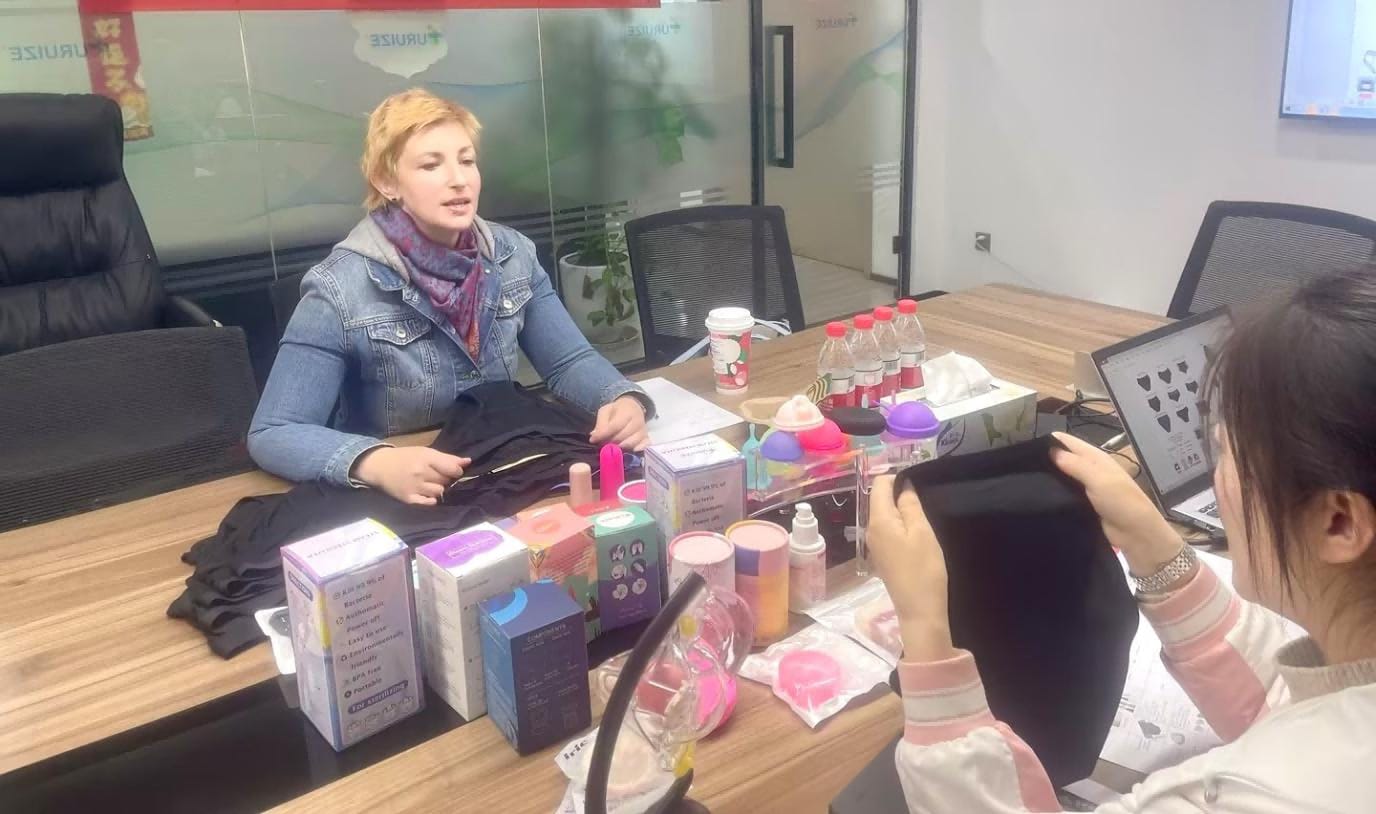
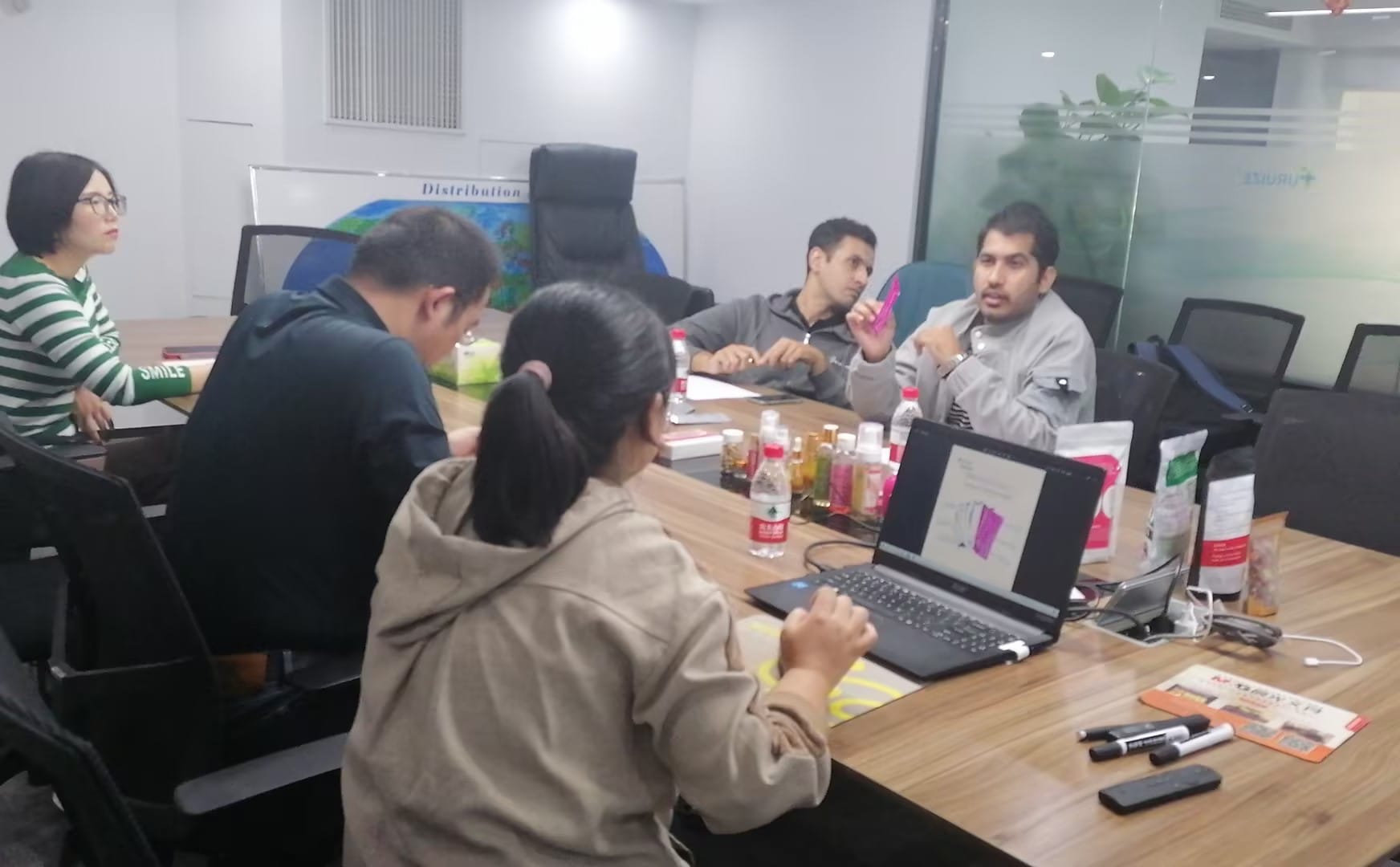
When they arrived at our office, the meeting room looked less like a negotiation and more like a product laboratory.
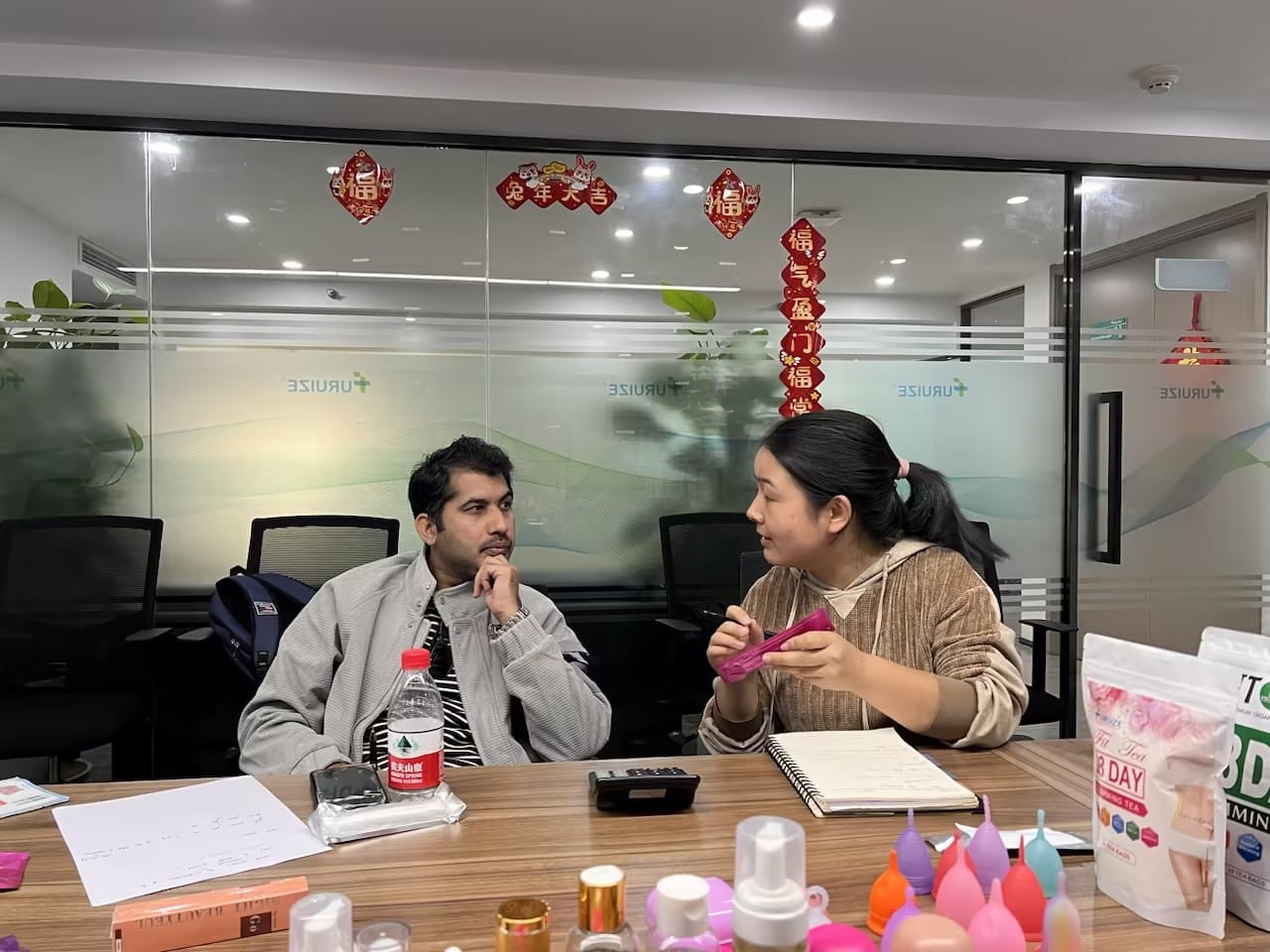
We spread samples across the table — different sizes, shore-A options, stem styles, color chips, pouches, retail boxes, and competitor cups they had brought from home for comparison. One of them opened a notebook immediately. The other listened with his hand on his chin, the way people listen when they are trying to decide whether a new idea is bravery or noise.
Our product colleague picked up a pink cup and walked through rim geometry, vent-hole placement, stem junction strength, and why a cup that looks beautiful in a photo can still fail a simple squeeze-recovery test. They asked follow-up questions in careful English. Sometimes they paused to translate a concept for each other in Urdu. Sometimes they laughed at how many details a “simple” cup contained.
That scene — products, calculator, water bottles, handwritten notes, and real questions — is the visit I remember most clearly.
Sample Display in the Office: Seeing a Category, Not a Single SKU
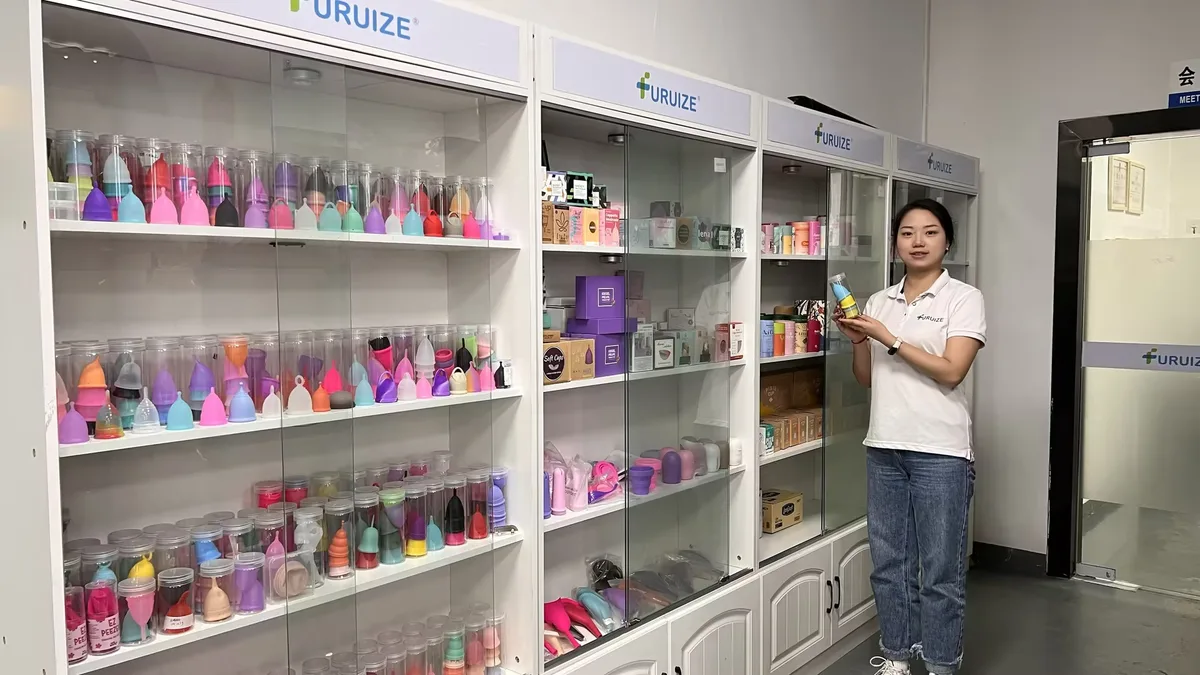
Later we walked to the sample display area inside our office building, where rows of cups and discs in different colors sit on open shelving for side-by-side comparison. For experienced buyers, this room is confirmation. For first-time founders, it is orientation.
They handled soft cups and firm cups back to back. They asked which options made sense for a market where many consumers may be hearing about menstrual cups for the first time. They wanted to know whether a brand should launch with one hero SKU or two sizes from day one. They studied packaging not as graphic design alone, but as education — how much explanation fits on an insert before the box becomes unreadable.
Our team did not push them toward the most expensive customization path. In fact, we advised the opposite. When you are still in school and still selecting a product, your first victory is clarity, not complexity. A single clear SKU with stable quality beats a glamorous catalog that your cash flow cannot support.
They seemed relieved to hear that. Many Alibaba conversations pressure young buyers into pretending they are bigger than they are. We preferred to speak to who they actually were.
Afternoon in the Conference Room: Logistics, Certificates, and Market Reality
After lunch, we returned to the meeting room for the topics they had listed in their first Alibaba message — the ones that are hard to explain properly in chat boxes.
We opened a laptop and walked through cup structure diagrams while physical samples sat beside the keyboard. That combination helped. They could see a rim profile on screen, then immediately compare it to the cup in hand. We talked through Pakistan-bound logistics in practical terms: carton sizes, first-trial air freight versus later sea freight, why lead-time promises on Alibaba often ignore packaging approval time, and how cash flow changes when a student founder orders too many colors too early.
Then we spread certificate copies and QC report samples across the table — ISO 13485 scope pages, FDA registration references, CE documentation, biocompatibility summaries, and material compliance sheets. They did not need every page memorized. They needed to know which files help when speaking to a future distributor in Lahore or Karachi, and which files are only useful if the factory can connect them to real batch records. We explained that difference slowly, with examples, still seated in the same office chairs they had used that morning.
One of them asked about daily production capacity even though they were not visiting the workshop. Fair question. We answered with numbers, line structure, and scheduling logic from the conference table, using production slides and exported planning charts rather than a shop-floor walk. For students still in product selection, that was enough for the day. If they return after graduation ready to launch, a production-floor visit can come later.
The Conversation Our Boss Joined — and Why It Mattered
Technical product knowledge can teach you what a menstrual cup is. It cannot always teach you what a first year in business feels like.
So our boss sat with them for a long informal discussion — not about press tonnage, but about entrepreneurship in the early stage. He shared lessons from his own path: how he chose categories, how he survived cash-flow pressure before repeat orders arrived, why he invested in certifications before chasing the lowest quote, how he built trust with international clients by answering bad news quickly, and why a factory relationship is often more valuable than a one-time bargain.
They listened differently in that meeting.
One of them asked how to know when you are ready to leave “research mode” and place a real order. Another asked how to talk to a skeptical family member who thinks importing from China is gambling. Our boss did not romanticize the answer. He said every business starts before the founder feels fully ready — but you should not confuse courage with skipping homework. He told them that if they returned after graduation with a clear channel plan, realistic launch quantity, and honest budget, we would treat them seriously. If they returned with only excitement, we would still be kind, but we would not pretend MOQ and tooling do not exist.
That conversation may have been the most useful part of the entire trip.
Why They Did Not Place an Order — and Why That Was the Right Outcome
By the final day, the mood was warm but realistic.
They told us they had learned what they came to learn. They understood the product category more deeply. They had a clearer picture of landed cost logic, certificate relevance, and why menstrual cups can be a strong repeat-purchase product when quality is stable. They also said something important: their studies still came first. They could not responsibly launch a brand while exams, coursework, and campus commitments still shaped their calendar.
So there was no purchase order. No deposit. No MOU signing photo.
And I do not think there should have been.
Too many suppliers pressure young visitors into “starting now” because a flight ticket feels like momentum. These two students had momentum — but it was intellectual momentum. They wanted to build something real after graduation, not burn borrowed money on a premature container because they felt awkward leaving China empty-handed.
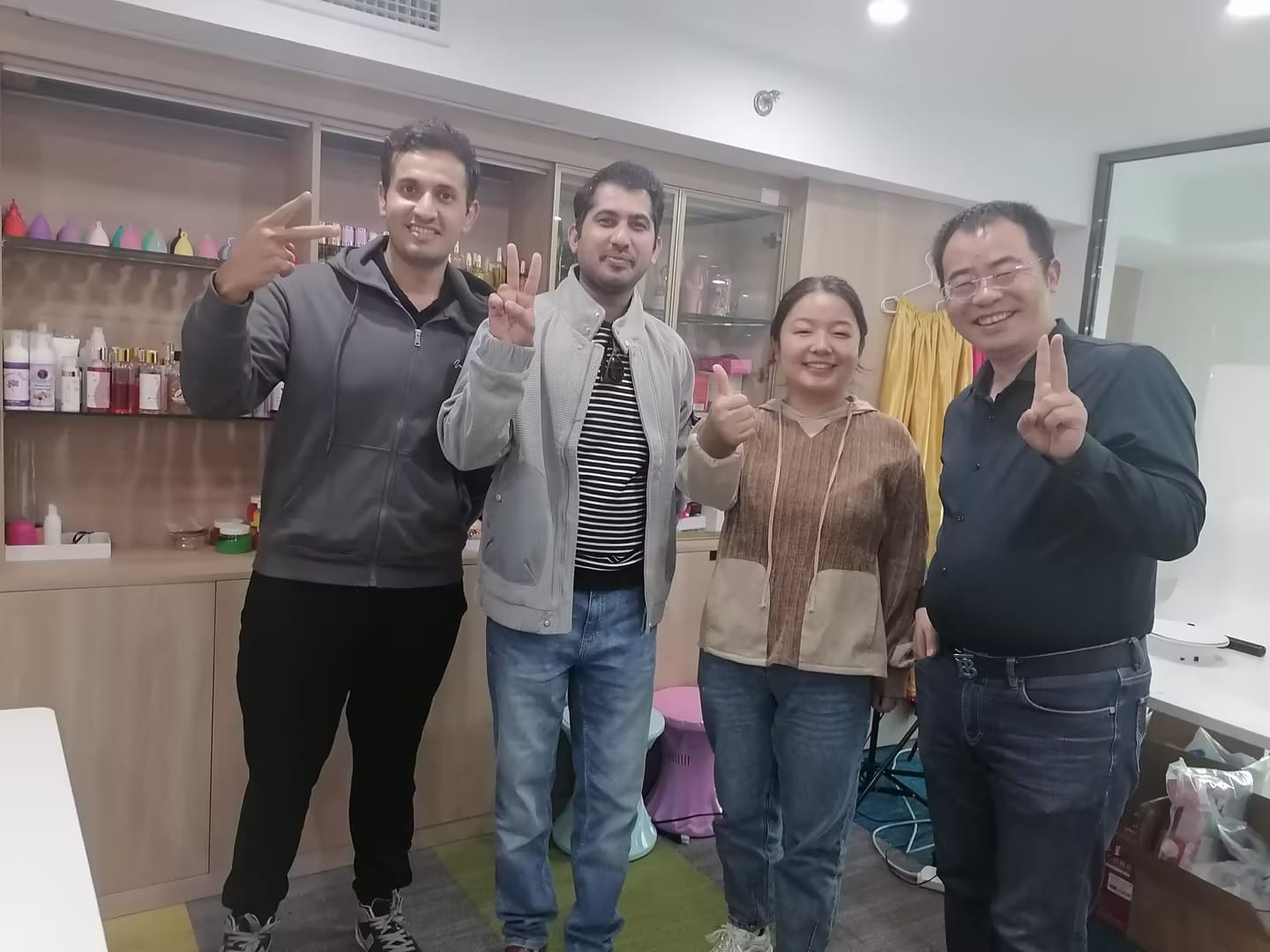
We exchanged contact cards, took a few group photos, and agreed to stay in touch. They said that when they were ready to move from product selection into execution, Furuize would be one of the first factories they contacted. We believed them because they had already behaved like founders who plan ahead.
What We Hope They Took Home to Pakistan
If this visit worked, they left with more than photos.
We hope they took home a framework:
Product
Know the difference between a pretty sample and a repeatable production spec. Know why rim finish, shore-A selection, and packaging education matter in markets where the category is still young.
Profit
Understand margin as a system — factory cost, packaging, freight, import friction, returns, and local retail price — not as a single Alibaba number minus wishful thinking.
Logistics
Plan lead times and shipment mode before you design a launch campaign. Social media excitement without inventory discipline is how first-time brands fail publicly.
Qualifications
Treat certificates as tools for trust, not trophies for a website footer. Ask how documentation connects to each production batch, not only to the homepage.
Timing
Respect the season you are in. Being a student now does not disqualify you from becoming a strong founder later. It means your first responsibility is to learn well — including learning what not to rush.
How This Visit Was Different from Our Other Customer Stories
We have published stories about Japanese MOU signings, Turkish full-range partnerships, Romanian omnichannel buyers, and Chilean capacity audits for stable supermarket supply. This story is different because it ends in preparation, not production.
That does not make it less real.
Some of the most important meetings we host are the ones that prevent a bad first order. A young founder who visits early, learns honestly in an office setting, and waits until school and strategy align may become a better long-term partner than an impulsive buyer who orders too much, too fast, with too little channel planning.
We would rather be the factory that taught them well in September than the factory that congratulated itself on a container they were not ready to sell through.
Why I Share This Story Publicly
If you are a student, recent graduate, or first-time entrepreneur in Pakistan — or anywhere else — evaluating menstrual cups on Alibaba, I hope this account helps you prepare.
You do not need to pretend you are already a major distributor. You need to ask real questions:
- What does a viable first SKU look like for my market?
- What costs exist beyond the factory quote?
- Which certificates matter for the way I plan to sell?
- What should I discuss in person before I trust a chat conversation?
- Am I ready to launch, or still in legitimate product selection?
An office visit can be worth taking even when you are not ready to buy — and even when you are not yet ready for a full production-floor tour. For first-time founders, that may be the best time to start.
Where Things Stand Today
We have stayed in occasional contact with the pair since September 2023. They have finished more coursework, refined their market thinking, and continued to explore how feminine-care products might fit Pakistan’s retail and online landscape. As of this writing, they have not yet begun bulk production with us — and that is consistent with what they told us on the last day of their trip.
If and when they move from selection to launch, we expect the conversation to start where we left it: with notebooks, numbers, and respect for the category.
Because the customer relationships we value at Furuize are not only the ones that begin with a wire transfer. Some begin with two students standing in front of our logo, asking honest questions, and proving they are willing to learn the business before they ask the business to carry them.
If your team is in a similar stage — researching menstrual cups through Alibaba, comparing suppliers, or planning a first office visit while still in school — we would be glad to talk. Tell us what you have already learned, what still confuses you, and what timeline is realistic. We will answer with the same honesty we showed in that September meeting room: what can wait, what cannot, and what you should clarify face to face before you place your first real order.
The best founders we meet are not always the ones who arrive ready to buy. Sometimes they are the ones who arrive ready to learn. These two students did — and that is why we still remember their visit.