· Furuize Team · Customer Stories · 11 min read
A Stable Chilean Partner Visits Our Factory — Verifying Production Environment and Capacity Before the Next Growth Phase
A first-person account of how Furuize welcomed a Chilean buyer who found us by email, sells through supermarkets and his own website, and traveled to Dongguan in June 2024 to verify clean-room discipline, warehouse organization, and real production capacity.
An Email That Sounded Like a Buyer Who Already Knew What He Needed
The inquiry arrived by email — not through a marketplace chat box, not through a forwarded introduction, but as a direct message from a Chilean business owner who had been supplying menstrual cups for years and was now evaluating whether his next growth phase required a deeper manufacturing partnership in China.
His opening paragraph was short. He said his sales were stable. He sold through supermarket chains and through his own brand website. He was not looking for a factory tour that felt like marketing. He wanted to see production environment standards and real capacity — whether we could keep shelves stocked during promotional seasons without quality drifting between batches.
That was the entire frame of the conversation.
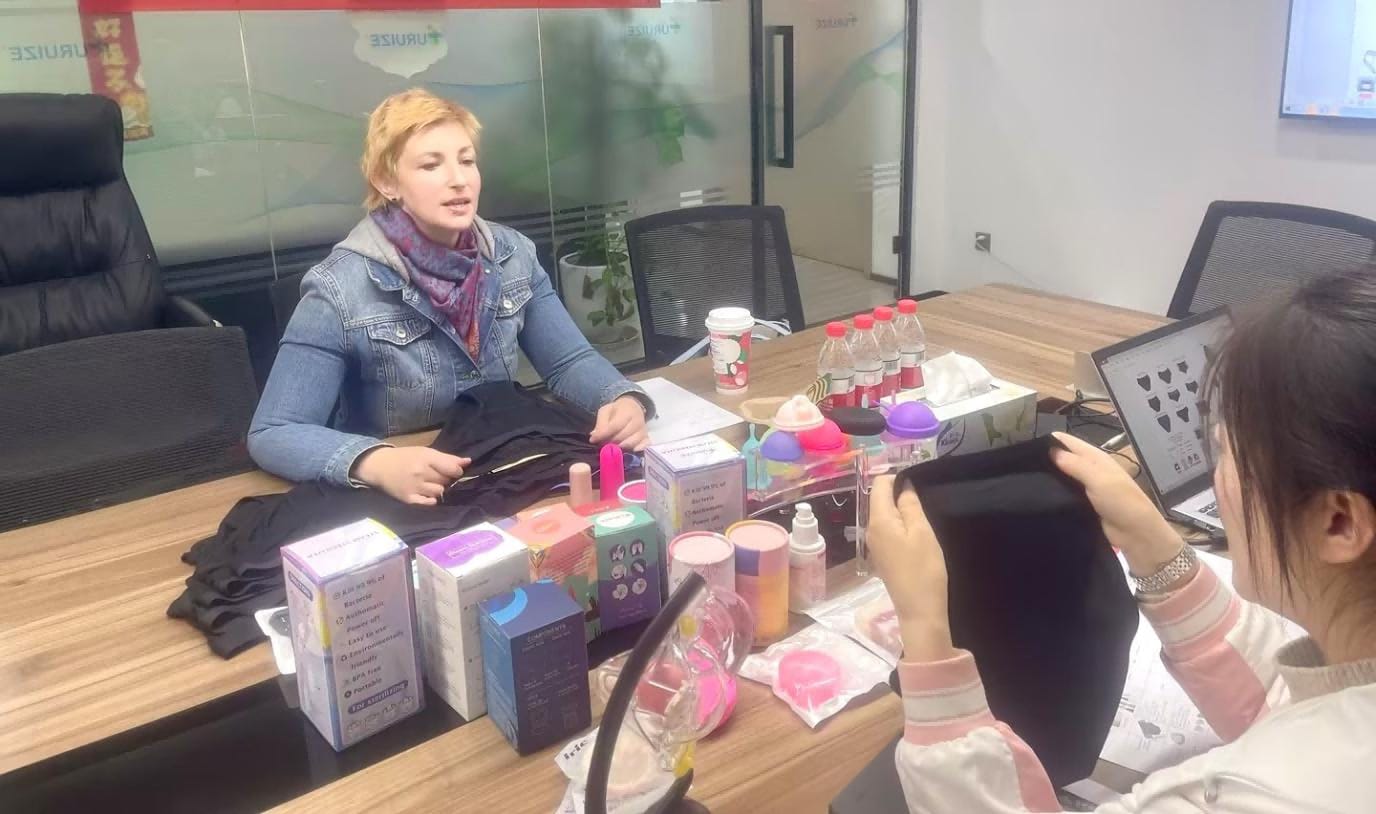
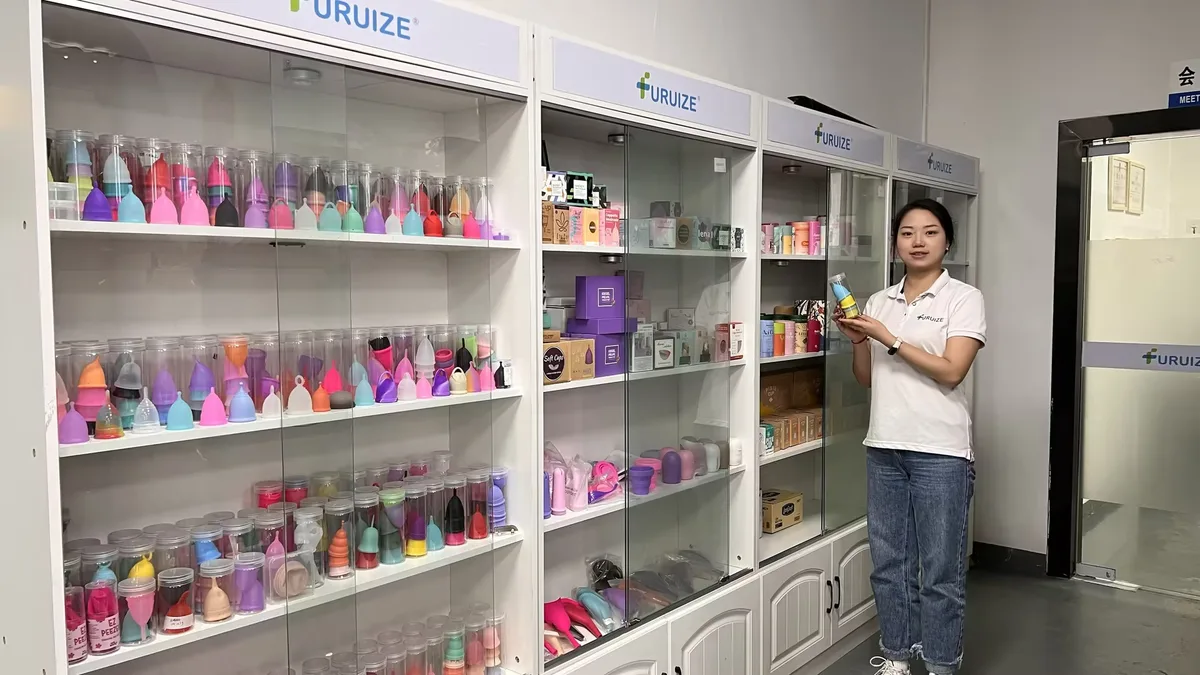
At Furuize, we manufacture menstrual cups, menstrual discs, sterilizer cups, and related feminine-care products for brands in more than sixty countries. Many first emails ask for MOQ and FOB within three lines. This one asked how many approved cavities we could run in parallel for a single SKU, how we segregate client molds on the floor, and whether our clean-room workflow could be shown without rehearsal.
I replied the same day with a straightforward capacity overview, our ISO 13485 scope summary, and an invitation to visit our Dongguan production base if he wanted to verify what was in the email. He answered within a week: yes, he would come in June.
This story is my account of that visit — what he cared about, what we showed him, and why a relationship with no dramatic setbacks can still be worth documenting.
Before the Flight: A Buyer With an Established Channel Mix
Over several weeks of email exchange, I learned more about how his business actually worked — and it explained why his questions centered on environment and throughput rather than basic product education.
Supermarket replenishment rhythm
Chilean retail buyers negotiate shelf space months in advance. A supplier that looks strong in a sample room but weak on repeat-lot consistency can damage years of retail trust in a single promotion cycle. He wanted to understand our production scheduling logic: how we reserve press time for repeat SKUs, how we document batch release before cartons leave, and how we handle a sudden uplift order when a chain runs a seasonal feature.
Own-website sales as a quality amplifier
His direct-to-consumer channel was not a side project. It was where customers left detailed reviews, compared rim softness batch to batch, and asked technical questions publicly. Stable online sales, in his view, only stay stable if the factory behind the brand stays boringly consistent. That is why he cared less about glossy renderings and more about whether the production floor looked controlled on an ordinary Tuesday.
What he asked for before visiting
His pre-visit checklist was practical:
- Walk through raw material warehousing and lot logging
- See live molding and post-cure areas without stopping the line for show
- Review how many lines could run his approved SKU family at the same time
- Confirm secondary inspection staffing during peak weeks
- Understand realistic lead times for a replenishment order versus a new color extension
We sent dimensional reports from an earlier sample round, a redacted production traveler, and a one-page capacity snapshot by product family. He replied that the documents were useful, but that he still wanted to stand on the floor himself. Fair enough.
June 2024: A Working Visit, Not a Performance
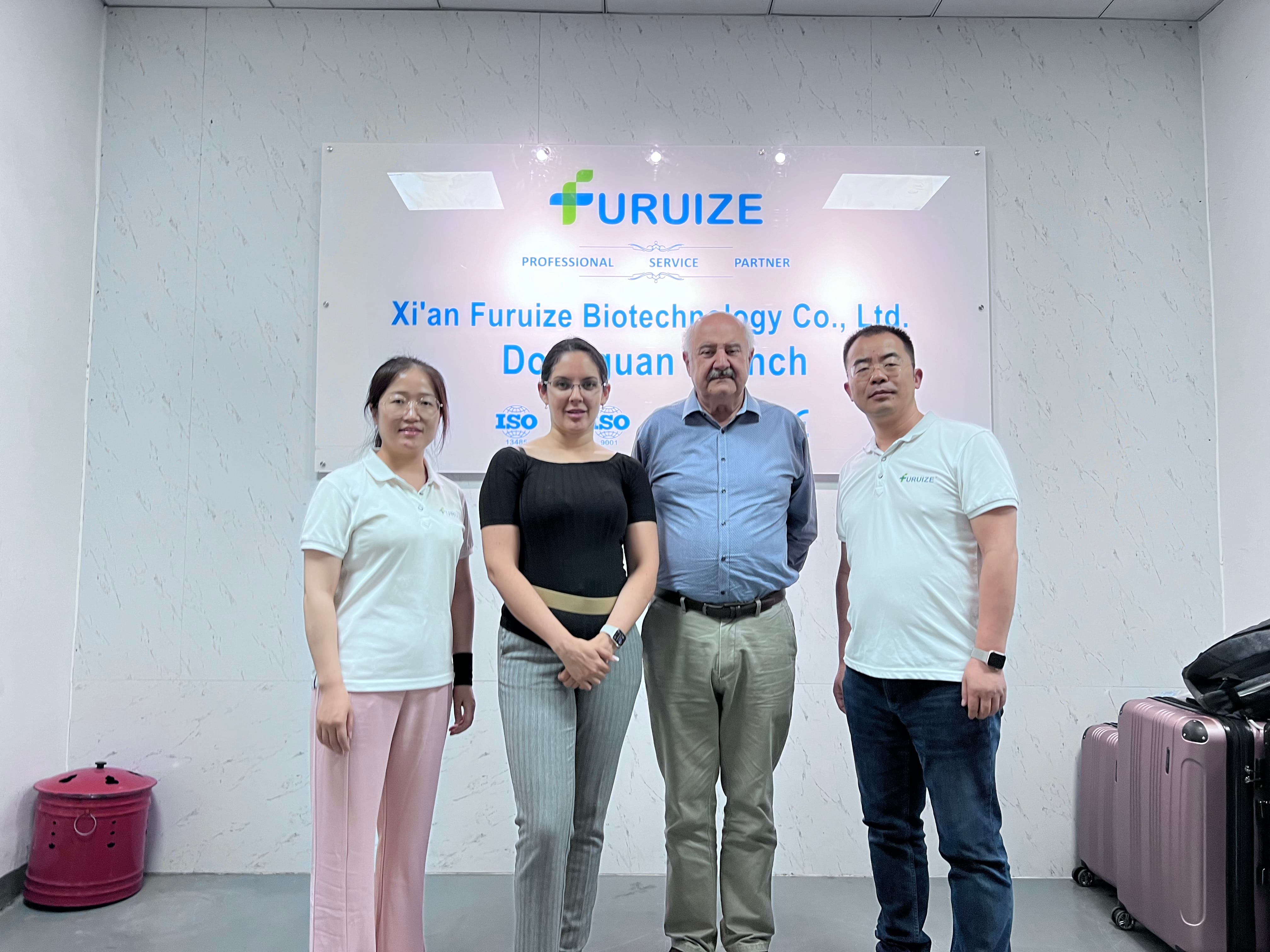
When he arrived at our Dongguan facility in June, two pink suitcases beside the reception sign told the story before anyone spoke a word — long flight, serious intent, no interest in a scripted welcome.
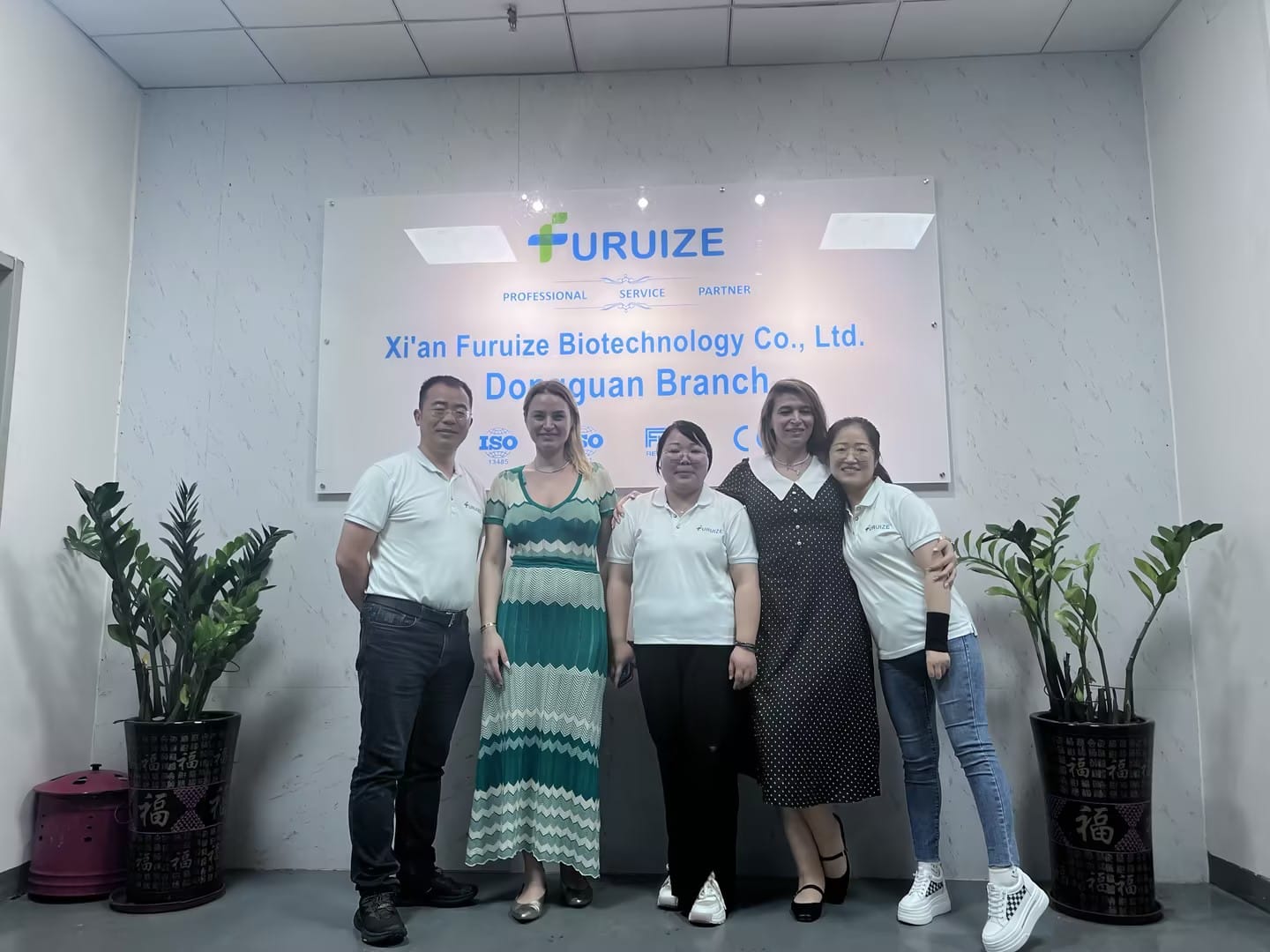
We took the group photo at the entrance, then moved quickly into the agenda he had essentially written through his emails.
There were no ceremony banners. We offered water, a safety briefing, hairnets, and a schedule pinned to the real areas he wanted to see: warehouse intake, material staging, production stations, QC release, and finished-goods staging for export.
He noticed details I am glad he noticed.
He paused at the blue storage racks and asked how often lot labels were reconciled against inbound silicone certificates. He watched operators handle pink cup components at a live table and asked whether that station was dedicated or reconfigured daily. He did not speak much during the walk. He looked, nodded, took a few notes, and asked precise follow-up questions in calm English.
That temperament matched everything he had written by email. This was not a founder chasing a dream SKU. This was an operator protecting a stable business while planning the next expansion.
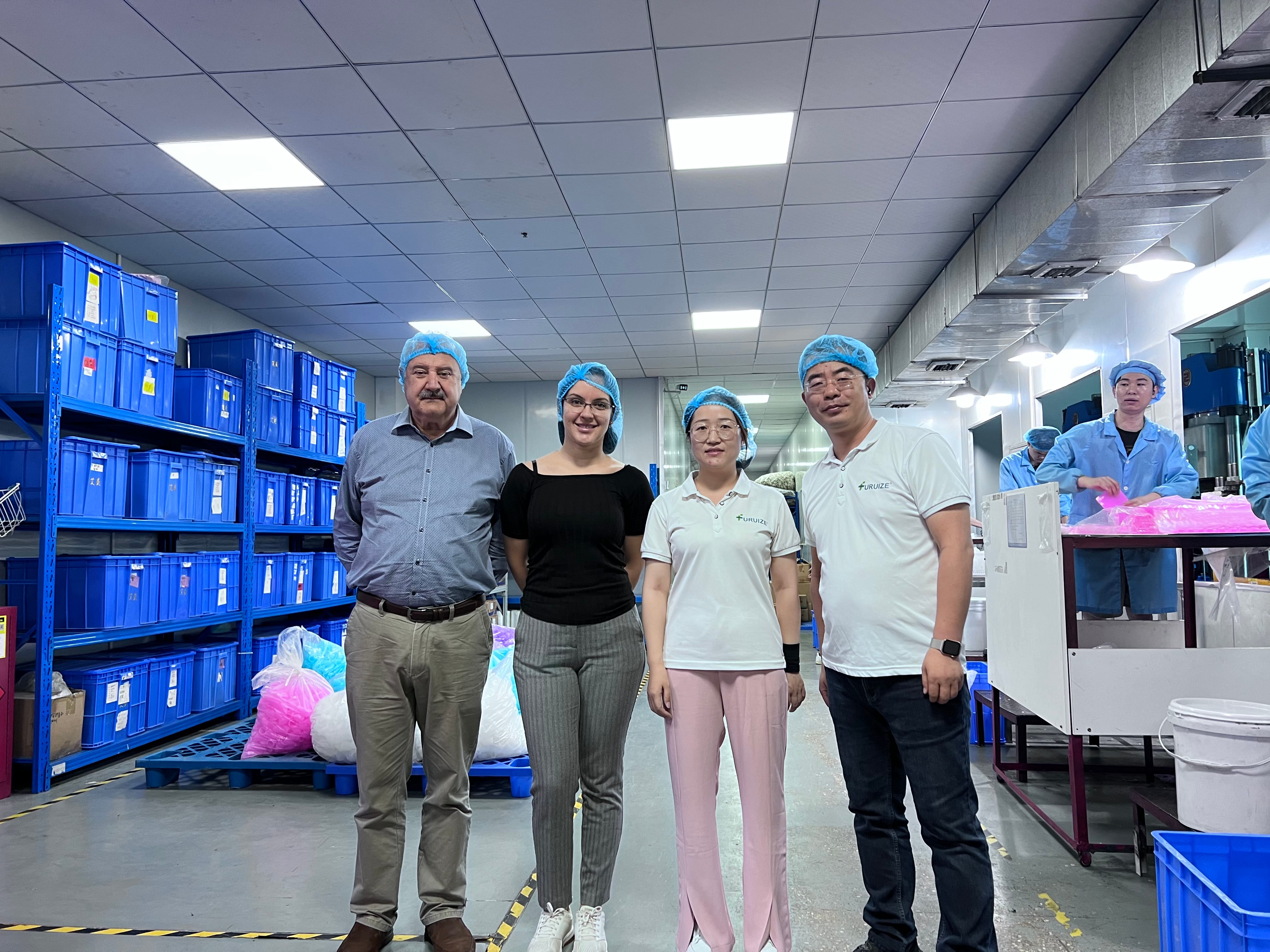
Production Environment: What He Actually Evaluated on the Floor
Other buyers begin with certificates. He began with environment — not because certifications were unimportant to him, but because his business had already survived long enough to know that paper and reality can diverge.
Warehouse discipline
He spent meaningful time in the material storage area shown in our walkthrough photo — blue racked bins, palletized bulk bags, clear lane markings on the floor. He asked how we prevent commingling when multiple medical-grade silicone lots are active in the same month. He wanted to know who signs off when a lot moves from inbound inspection to mixing eligibility.
Live production, not a paused demo
He specifically requested that we not stop a line just for photography. He wanted to see what normal production looked like when visitors were not in the building. Watching staff in hairnets continue their stations while he observed seemed to satisfy him more than any presentation slide could.
Cleanliness as a daily habit
He commented that the floor marking, bin labeling, and general orderliness matched what he hoped to find — not laboratory perfection, but a facility where discipline was visible without explanation. For supermarket buyers, that matters. Retailers rarely forgive a supplier who blames “one bad week on the line” after customers complain.
Capacity: The Question Behind Every Other Question
If production environment was the first test, capacity was the second — and for him, the two were linked. A clean room that cannot scale becomes a beautiful bottleneck.
We walked through capacity in plain numbers and plain constraints:
- Parallel press availability for his core cup sizes once molds were approved and slotted
- Secondary curing and trimming throughput during weeks when multiple private-label programs run together
- QC staffing relative to cavity count — because increasing output without increasing inspection bandwidth is how brands get surprised
- Packaging line timing for retail cartons versus shipper cartons bound for Chile
- Recovery planning when one cavity set needs maintenance but replenishment dates do not move
He listened carefully and asked the question I respect most from experienced buyers: “What happens when I give you four weeks’ notice for a uplift that is thirty percent above forecast?”
We answered with our scheduling board logic, not a slogan. He seemed satisfied — not excited, satisfied. That is the reaction I trust.
Sales Stability Changes the Conversation
Because his sales were already stable, this visit was not about validating whether menstrual cups would sell. It was about validating whether Furuize could become the factory that protects what he had already built.
That distinction shaped the whole trip.
He did not need a lecture on category education. He did not need a motivational speech about reusable products. He needed evidence that switching or deepening a manufacturing partnership would not interrupt shelf presence in Chilean supermarkets or create review volatility on his website.
So our commercial discussion stayed grounded:
- Replenishment cadence aligned to retail promotion calendars
- Safety stock recommendations for ocean transit to Chile
- Change-control rules if rim geometry or pigment lots shifted
- Communication rhythm for production start, mid-run checkpoint, and pre-shipment release
No hype. Just operations.
A Process Without Drama — and Why That Still Matters
I want to be honest about one point: this partnership story does not include a crisis chapter.
No sample failed at the last minute. No argument over mold ownership nearly ended the visit. No emergency rework overnight in the hotel conference room. When I asked our team afterward how the trip went, the answer was simply that the client saw what he needed to see and said he would move forward with the next planning stage.
That is unusual in customer stories, and it is true.
Some buyers need a factory visit because something already went wrong elsewhere. This buyer needed a factory visit because things had gone right for years — and he refused to risk that stability on assumptions. The absence of problems during the process was not luck. It was the point.
What Happened After He Returned to Chile
A visit opens the door. Execution keeps it open.
After he flew back, we moved into a structured handoff that matched the calm tone of the trip itself:
Phase 1 — Capacity reservation review
We mapped his core SKUs to press slots and confirmed replenishment windows for the next two retail cycles on his supermarket side and the next three website fulfillment waves on his direct channel.
Phase 2 — Specification confirmation
Because his range was mature, we did not reinvent product geometry. We confirmed traveler checkpoints, packaging revision levels, and carton marking rules so new lots would match what his customers already recognized on shelf and in parcel photos online.
Phase 3 — Pilot replenishment run
Before any major uplift, we ran a replenishment lot under the approved recipe and sent batch documentation aligned to what he had reviewed in Dongguan. No surprises by design.
Phase 4 — Ongoing production rhythm
The first post-visit orders shipped on the timeline we discussed on-site. Follow-up emails were short and operational — production start dates, inspection summaries, sailing schedules. Exactly what a stable business prefers.
What This Chilean Partner Taught Us
Serving a stable omnichannel buyer sharpened our factory communication in a different way than startup partnerships do.
He reminded us that some of the best customers are not loudest at the beginning. They arrive with working sales, clear concerns, and little patience for storytelling that cannot survive a warehouse walk.
He also reinforced that capacity and environment are not abstract marketing words. For supermarket supply, they are the difference between a brand that stays on shelf and a brand that gets replaced after one bad promotion season.
Finally, he proved that email can still be the right front door. Not every serious factory relationship begins on a platform badge. Some begin with a direct message from someone who already knows what stable looks like — and will travel to China to make sure the next stage of growth does not disturb it.
Why I Share This Story Publicly
We publish customer stories to show how partnerships actually begin — not only the dramatic ones.
If you are evaluating a menstrual cup manufacturer from Chile, Latin America, or any market where supermarket listings and your own website share the same reputation, I hope this account helps you prepare better questions:
- Ask to see live production, not a paused demo line
- Ask how capacity is reserved before you need it, not after
- Ask how warehouse discipline connects to batch release
- Ask what happens during a forecast uplift, not only during a first order
- Treat a smooth visit as evidence of maturity — not as a reason to skip due diligence
Where We Are Today
Our relationship with this Chilean partner remains active. Replenishment planning continues across his supermarket and website channels. When new buyers from Latin America ask whether we can support stable retail supply — not just first containers — this is one of the visits I reference.
He chose Furuize after seeing the production floor for exactly the reasons he named in his first email: environment and capacity. The process stayed straightforward because he came prepared, and because we treated his visit as an audit, not a performance.
If your team sells through retail chains and your own site, and you are considering a factory visit to verify whether your next supplier can protect a business that already works, we would be glad to talk. Send your SKU list, current monthly volume, and the questions you need answered on-site. We will reply with an honest plan — including what you can verify in one day, what needs sample validation, and how we schedule capacity for partners who plan to stay.
Because the partnerships we are proudest of at Furuize are not always the loudest at the start. Sometimes they are the ones built by buyers who already know what stable looks like — and come to Dongguan to make sure the factory behind the brand can keep it that way.